Wine pairing sounds intimidating, but the basics are actually pretty simple. Once you understand a few core ideas, you can match wine with almost any meal without overthinking it. The goal is not to follow strict rules. The goal is to find combinations that make both the wine and the food taste better than either does alone.
This wine pairing guide walks through the simple rules, the most popular food and wine matches, and how to think about pairing on the fly. Use it alongside our Types of Red Wine, Types of White Wine, and Types of Rosé Wine guides to build your foundation.
The Three Core Wine Pairing Rules
Forget the long list of “rules.” Three principles cover ninety percent of every wine pairing question.
Match weight to weight. A light dish goes with a light wine. A heavy dish goes with a heavy wine. A delicate piece of grilled fish gets overwhelmed by a big Cabernet. A bold steak makes a crisp Pinot Grigio feel watery. Match the body of the food to the body of the wine and you are already most of the way there.
Match intensity to intensity. Bold, spicy, smoky foods need wines with enough flavor to stand up. Subtle, delicate foods need wines that step back and let the dish shine.
Acidity loves acidity. Acidic foods like tomato sauce, lemon, vinegar, and citrus need wines with bright acidity. Pair a creamy pasta with a sharp Sauvignon Blanc and the wine will taste flat. Pair the same wine with a tomato-based dish and both come alive. Our broader wine pairings page covers more on this topic.
Wine Pairing for Steak and Red Meat
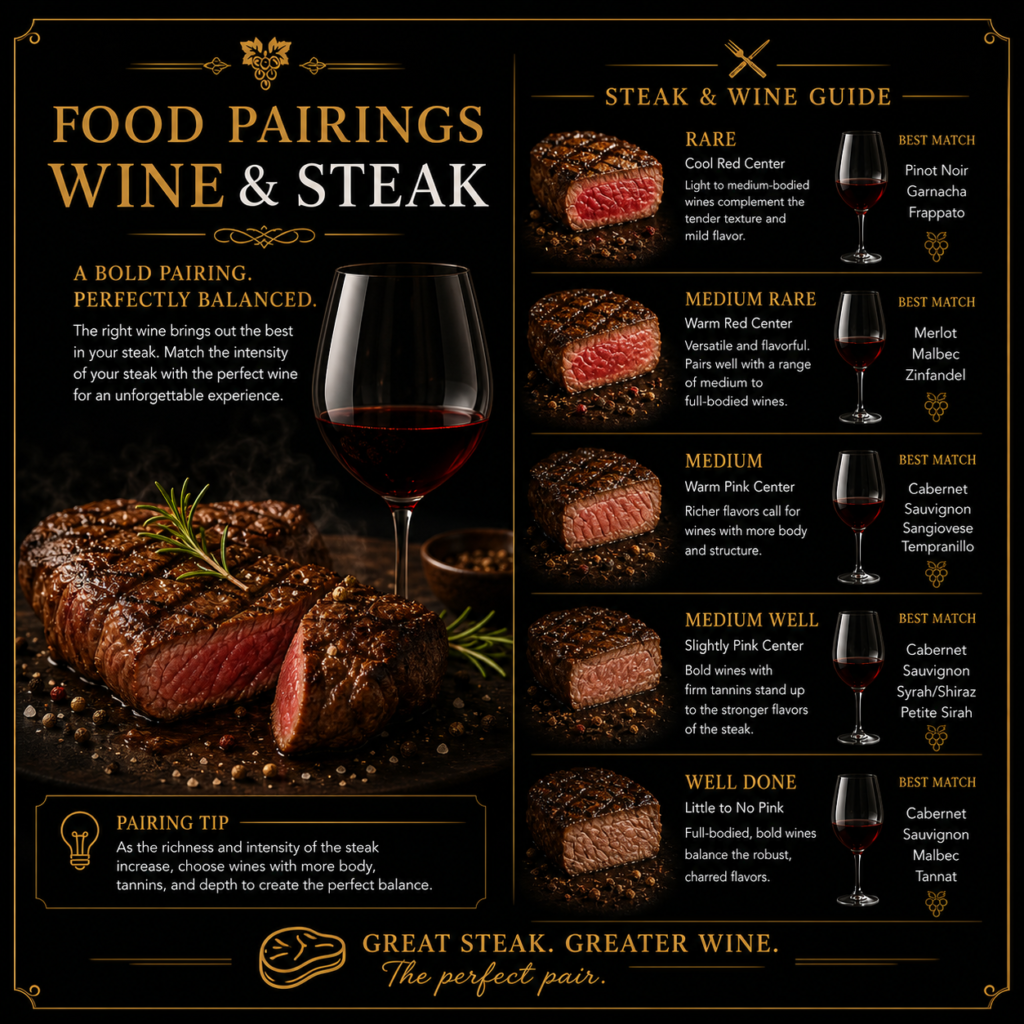
Steak and red wine is the most famous wine pairing in the world, and there is a reason it works. The fat and protein in red meat soften tannins. The bold flavors of red wine match the bold flavors of charred beef.
For ribeye, New York strip, and other fatty cuts, reach for Cabernet Sauvignon, Malbec, or Zinfandel. For leaner cuts like filet mignon, a Merlot or Pinot Noir works better. Read our wine with steak guide for the full breakdown.
Lamb pairs beautifully with Syrah, Bordeaux blends, and bold Spanish reds. Pork is more flexible. Lighter pork dishes work with Pinot Noir or rosé. Smoky barbecue pork sings with Zinfandel.
Wine Pairing for Chicken and Poultry
Chicken is one of the most flexible foods for wine pairing because the flavor depends entirely on how you cook it.
Grilled or roasted chicken pairs with unoaked Chardonnay, Pinot Grigio, or Sauvignon Blanc. Add a creamy sauce and the wine can shift to a richer Chardonnay or a Viognier. Spicy chicken dishes like jerk or buffalo work surprisingly well with off-dry Riesling, which cools the heat without clashing.
Turkey has gotten a reputation as a tricky wine pairing because the bird is mild, but the trimmings carry the flavor. Pinot Noir, Beaujolais, or even a Sangiovese all work beautifully with traditional turkey dinners.
Duck is the underrated poultry pairing. The rich fat of duck loves Pinot Noir, Syrah, and even some sweet Gewürztraminer with a sweet glaze.
Wine Pairing for Seafood and Fish
The classic rule of “white wine with fish” is mostly right, but the modern wine pairing approach has more nuance.
Light flaky fish like sole, cod, and tilapia pair perfectly with crisp white wines. Sauvignon Blanc, Pinot Grigio, and unoaked Chardonnay all shine here. Add lemon or capers and the high-acid whites become even better.
Rich fatty fish like salmon, tuna, and swordfish can handle bigger wines. Try a buttery Chardonnay, a rosé, or even a light Pinot Noir. The fish has enough body to stand up to a fuller wine.
Shellfish like oysters, mussels, and clams call for bone-dry wines with bright acidity. Champagne, Muscadet, and dry sparkling wines are classic shellfish pairings. Shrimp scampi pairs well with a Sauvignon Blanc or a Pinot Grigio.
Wine Pairing for Pasta and Pizza
The sauce drives the wine pairing for pasta, not the pasta itself.
Tomato-based sauces need wines with matching acidity. Sangiovese, Chianti, and Barbera are reliable Italian picks. Cream-based sauces need wines with enough body to hold up. Chardonnay, Pinot Gris, and Viognier work well here. Pesto pairs beautifully with crisp dry whites like Vermentino or Sauvignon Blanc.
Pizza follows the same logic. Margherita pairs with Chianti. Pepperoni and sausage pizzas call for Zinfandel or Malbec. White pizzas with cream or pesto match unoaked Chardonnay.
Wine Pairing for Cheese
The old rule of “red wine with cheese” is actually wrong more often than right. White wines often pair better with cheese because the acidity and lighter body refresh the palate between bites.
Soft creamy cheeses like brie and goat cheese pair beautifully with sparkling wines and Sauvignon Blanc. Aged hard cheeses like Parmigiano and aged cheddar work with bigger reds and even off-dry whites. Blue cheese is a bold combination that pairs surprisingly well with sweet wines like Port or late-harvest Riesling.
When building a cheese board, lean toward versatile wines. A medium-bodied red and a crisp white together handle almost any cheese selection.
Wine Pairing for Spicy Food
Spicy food needs special wine pairing consideration. Alcohol amplifies heat, so high-alcohol bold reds make spicy dishes taste hotter, not better.
The trick is to reach for slightly sweet, lower-alcohol wines. Off-dry Riesling is the gold standard with Thai, Indian, and Sichuan dishes. The touch of sweetness cools the heat, while the high acidity refreshes the palate. Gewürztraminer also works beautifully.
For Mexican food, a light red like Pinot Noir or a fruity rosé handles the spice well. Avoid big oaky Chardonnays and tannic reds with anything fiery.
Wine Pairing for Dessert
The general rule for dessert wine pairing is that the wine should be at least as sweet as the dessert. A dry wine next to a sweet dessert will taste sour and thin.
Sweet wines like Moscato, late-harvest Riesling, and Sauternes pair with fruit-based desserts. Port wine matches chocolate desserts and aged blue cheese. Sparkling demi-sec Champagne works with light pastries and fresh fruit.
How to Start Your Own Wine Pairing Experiments
The fastest way to improve your wine pairing instincts is to try simple side-by-side comparisons. Pour two different wines next to one dish. Notice which one makes the food taste better. Over time, your palate builds a memory of what works.
Want personal wine recommendations built around your taste? Take our Perfect Match wine quiz. Twenty quick questions about your preferences and you get a personal wine pick in three minutes. Pair smarter, not harder.
Frequently Asked Questions
What is the most important wine pairing rule?
Match the weight of the wine to the weight of the food. A light dish needs a light wine. A heavy dish needs a heavy wine. Everything else builds from that single principle.
Do you really have to drink red wine with red meat?
No. The pairing works because of fat and protein, not color. Bold whites like oaked Chardonnay can pair with leaner red meats. Light reds like Pinot Noir often pair with salmon. Color is a starting point, not a rule.
What is the easiest wine pairing for beginners?
Pinot Grigio with grilled chicken or pasta. Sauvignon Blanc with salad and seafood. Malbec with burgers or pizza. These three matches cover the most common weeknight meals.
How do I pair wine with spicy food?
Reach for off-dry Riesling, Gewürztraminer, or a fruity rosé. Avoid high-alcohol bold reds, which amplify heat. The slight sweetness in these wines balances spice better than dry wines.
Where can I find more wine pairing examples?
Our wine pairings page covers individual dishes in more detail, and each of our grape variety blogs (Malbec, Zinfandel, Sangiovese) has a dedicated pairing section.
Find Your Perfect Match
Take our Perfect Match wine quiz and get a wine recommendation built around your taste in three minutes. Whether you are planning steak night or shrimp tacos, we will point you toward the wine that makes the meal better.Share