Malbec Wine: The Complete Beginner’s Guide
Malbec is one of the most popular red wines in the world, and for good reason. It is bold without being aggressive, fruity without being sweet, and approachable without being boring. Whether you are new to wine or just new to Malbec, this guide covers everything you need to know — from how it tastes to where it comes from and what to eat with it.
What Is Malbec?
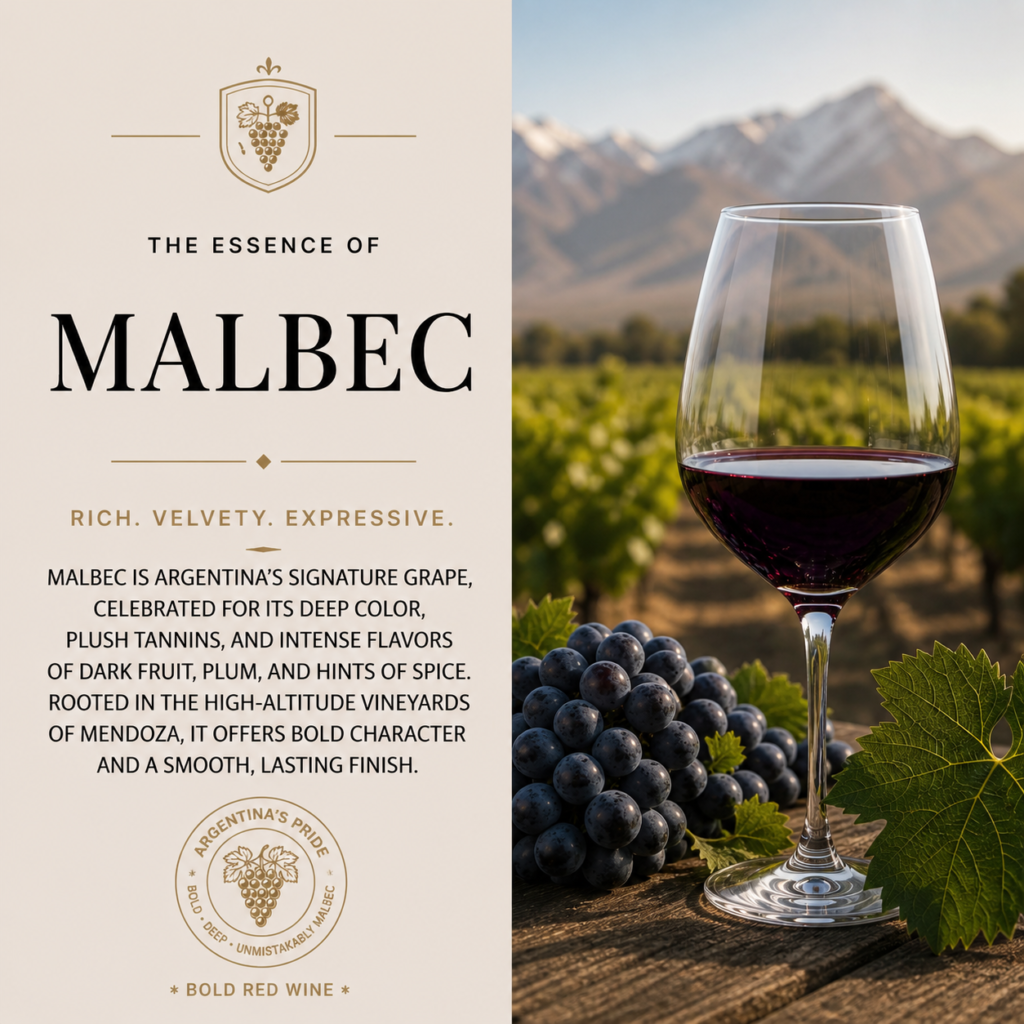
Malbec is a red grape variety originally from France. Today it is most famous as Argentina’s signature wine. The grape produces wines that are deep purple in color, full in body, and rich in dark fruit flavors. It is one of the most planted grape varieties in the world and consistently ranks among the best-selling red wines in the United States.
Malbec was one of six grapes permitted in traditional Bordeaux blends in France, but it struggled in the cool, wet French climate. When it was planted in Argentina’s high-altitude vineyards — particularly in the Mendoza region — it thrived. The intense sun and cool nights of the Andes foothills brought out the grape’s best qualities in ways France never could.
What Does Malbec Taste Like?
Malbec is a full-bodied red wine with flavors that lean toward dark fruit. Expect notes of blackberry, plum, black cherry, and blueberry. Depending on where it is grown and how it is made, you may also notice chocolate, mocha, violet, leather, and a hint of tobacco on the finish.
Argentine Malbec tends to be fruit-forward, smooth, and approachable with velvety tannins and a long, warm finish. French Malbec — made primarily in Cahors, where it is called Cot — is earthier, more tannic, and more rustic in character. Both styles are worth exploring, but most beginners fall in love with the Argentine version first.
Malbec vs Other Red Wines
If you enjoy Merlot but want something a little bolder, Malbec is a natural next step. It shares Merlot’s plummy, smooth character but adds more depth and color. Compared to Cabernet Sauvignon, Malbec is softer in tannin and more immediately approachable. It sits comfortably between the two in terms of body and structure.
Where Is Malbec Made?
Argentina — Mendoza
Argentina is the undisputed world capital of Malbec. The Mendoza region, sitting at the foot of the Andes at elevations between 2,000 and 4,000 feet, produces the wines that made Malbec famous globally. The high altitude gives the grapes intense sun during the day and cool temperatures at night, creating wines with vivid color, deep fruit, and fresh acidity.
France — Cahors
Cahors in southwest France is where Malbec originated. Local producers call it Cot or Auxerrois. The wines are darker, more tannic, and more structured than Argentine Malbec. They require more time to open up but reward patience with incredible complexity.
Other Regions
Chile, the United States, South Africa, and Australia all produce Malbec with varying degrees of success. Chilean Malbec is growing in reputation, offering similar approachability to Argentine expressions at very competitive prices.
Best Food Pairings for Malbec
Malbec is one of the most food-friendly red wines available. Grilled meats are the classic Malbec pairing. A well-marbled ribeye, a rack of lamb, or Argentine-style asado beef is about as perfect a match as you will find. The wine’s tannins cut through the fat while its fruit complements the char and smoke.
Malbec also pairs beautifully with mushroom-based dishes, roasted root vegetables, aged hard cheeses like manchego and cheddar, and dark chocolate. It is surprisingly versatile at the dinner table.
How to Choose a Malbec
For everyday drinking, look for Argentine Malbec from Mendoza in the 12 to 20 dollar range. Reserve and Gran Reserva designations indicate longer oak aging and more complexity. If you want to spend a little more, look for single-vineyard expressions from high-altitude areas above 3,500 feet.
How to Serve Malbec
Serve Malbec between 60 and 65 degrees Fahrenheit. Young, full-bodied Malbec benefits from 30 minutes in a decanter — the air helps soften the tannins and open up the aromas. Learn more in our wine basics guide.
Frequently Asked Questions
Is Malbec a dry wine?
Yes. Malbec is a dry red wine. Despite its rich, fruity flavor profile, it contains very little residual sugar. The impression of sweetness comes from its ripe dark fruit aromas, not from actual sugar in the wine.
Is Malbec similar to Cabernet Sauvignon?
Malbec and Cabernet Sauvignon are both full-bodied reds, but Malbec is generally softer in tannin and more immediately approachable. If Cabernet feels too grippy for you, Malbec is an excellent alternative.
What is the difference between Argentine and French Malbec?
Argentine Malbec is fruit-forward, smooth, and velvety. French Malbec from Cahors is earthier, more tannic, and more structured. Argentine Malbec is the more beginner-friendly style.
How long does Malbec last after opening?
Most Malbec stays fresh for two to three days after opening if re-corked and stored in the refrigerator. Full-bodied, tannic expressions may last up to four days.
What temperature should I serve Malbec?
Serve Malbec between 60 and 65 degrees Fahrenheit — slightly cooler than typical room temperature. This brings out the best balance of fruit, tannin, and aroma.