Rosé is one of the most misunderstood wine categories. Many beginners assume all pink wine is sweet, but the reality is far more varied. The types of rosé wine on the shelf range from bone-dry and crisp to honey-sweet and rich. Some look pale and salmon-toned. Others look almost red.
This guide walks through six popular styles in plain language. You will learn what each one tastes like, the foods it pairs with, and a starter bottle to try. Use it alongside our Types of Red Wine and Types of White Wine guides to round out your foundation.
How Rosé Wine is Made
Before we dive into the types of rosé wine, here is the quick version of how the pink color happens. Rosé is made from red grapes, but the grape skins only stay in contact with the juice for a short time. That brief contact produces the pink color and a lighter, fresher flavor than a full red wine.
The longer the skins stay in the juice, the deeper the color. The shorter the contact, the paler the rosé. Style also depends on the grape, the region, and how much sweetness the winemaker leaves in. Read more on our rosé wine page for a deeper dive into the category.
6 Popular Types of Rosé Wine to Know
These six styles cover the most common rosé wines you will see at any store or restaurant.
1. Provençal Rosé
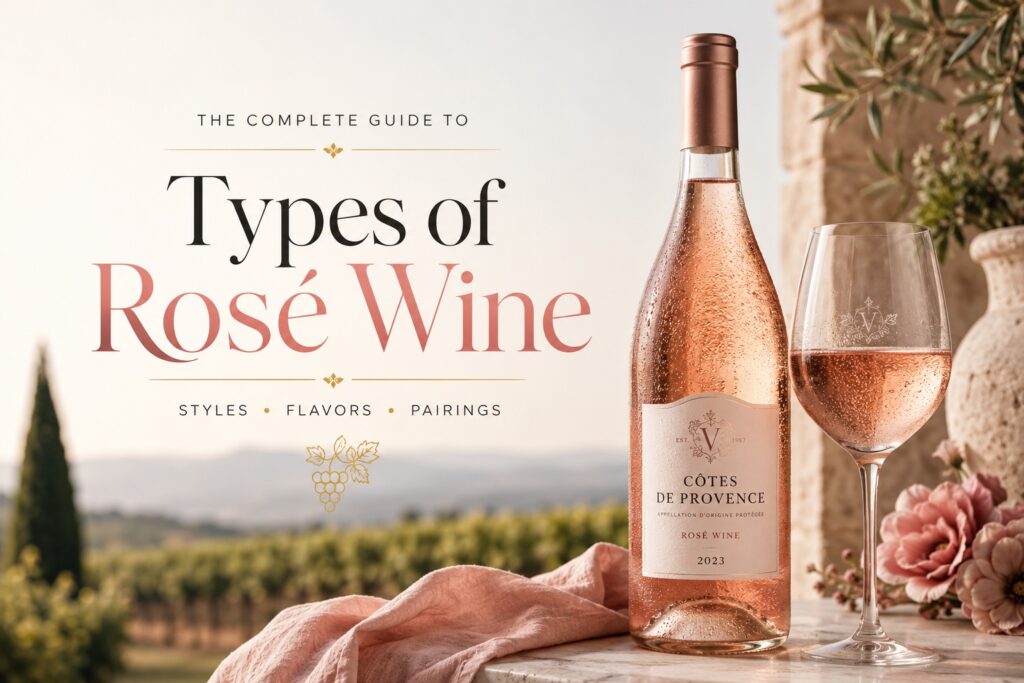
This is the iconic dry pink wine from southern France. The color is pale, almost peachy. The flavor leans toward strawberry, watermelon, citrus zest, and crisp minerality. Provençal rosé is bone-dry, light-bodied, and the gold standard for warm-weather sipping.
Look for bottles from Côtes de Provence or Bandol. These are usually made from Grenache, Cinsault, and Mourvèdre. Browse our Grenache page to learn more about the lead grape.
2. White Zinfandel
The famous sweet American rosé. White Zinfandel is made from the Zinfandel grape, but the juice has very brief skin contact. The result is a light pink wine with noticeable sweetness and flavors of strawberry, ripe peach, and watermelon candy.
White Zinfandel is one of the friendliest types of rosé wine for people who prefer sweet drinks. It is also low in alcohol, usually around 9 to 10 percent. For a full breakdown of the underlying grape, see our Zinfandel wine guide.
3. Rosé d’Anjou
This is the off-dry French rosé from the Loire Valley. The flavor is fruity with notes of red berry, candied apple, and a touch of honey. The sweetness sits between Provençal rosé and White Zinfandel, which makes it a great middle-ground pick.
Easy to drink, easy to pair, and usually under fifteen dollars.
4. Tavel
Tavel is the bold, deep-colored rosé from the southern Rhône region of France. Unlike Provençal rosé, Tavel is rich and almost feels like a light red. The color is deep pink, the body is full, and the flavor leans toward red cherry, raspberry, and herbs.
Tavel is the rosé to reach for when you want something with structure. It pairs with serious food, not just summer salads.
5. Italian Rosato
Italian rosato wines vary widely by region. Tuscan rosato made from Sangiovese is dry, tart, and food-friendly with flavors of red cherry and dried herbs. Southern Italian rosato made from grapes like Aglianico is richer and more savory.
If you already enjoy Italian reds, the corresponding rosato is a natural next step. Read our Sangiovese wine guide for more on the lead Tuscan grape.
6. Spanish Rosado
Spanish rosado is bold, dry, and often surprising. Made primarily from Tempranillo and Garnacha, these wines have deep color, ripe red fruit, and a touch of spice. Navarra and Rioja are the famous regions.
For people who love rosé but want more weight than Provence delivers, Spanish rosado is the answer.
Dry vs Sweet Rosé Wine Types
The sweetness range across types of rosé wine is one of the widest in the wine world. Here is how the six styles above stack up.
Dry rosés: Provençal rosé, Tavel, Italian rosato, Spanish rosado
Off-dry rosés: Rosé d’Anjou, some Provençal rosés
Sweet rosés: White Zinfandel, late-harvest pink wines
A common surprise for beginners is that most rosé sold in restaurants is dry. The pink color tricks people into expecting sweetness. Read our dry vs sweet wine guide for the full breakdown on residual sugar.
How to Serve Rosé Wine
A few simple rules make any rosé taste better.
Serve rosé cold. The right serving temperature sits between forty-five and fifty-five degrees Fahrenheit. Pull the bottle from the fridge about fifteen minutes before pouring. Our wine serving temperature guide covers the details by wine type.
Use a standard white wine glass. The cooler temperature and lighter body call for a tighter bowl. The wine glass guide explains which shape works best for each style.
Drink rosé young. Most types of rosé wine are made to be enjoyed within one to two years of the vintage. Older rosé loses its freshness fast.
Rosé Wine Food Pairings
Rosé is one of the most flexible food wines. The light body and bright acidity match a huge range of dishes.
Dry rosés pair beautifully with charcuterie, salads with goat cheese, grilled fish, shrimp, pasta with light tomato sauce, and Mediterranean dishes. White Zinfandel and other sweet rosés work with spicy Asian food, barbecue, and salty snacks.
Our wine pairings page covers more food matches across all wine styles.
How to Pick a Rosé You’ll Actually Enjoy
If you typically prefer crisp, clean whites, start with a Provençal rosé. If you love sweet drinks, grab a White Zinfandel. If you want something bolder, reach for a Tavel or Spanish rosado.
Want a personal pick built around your specific taste? Our Perfect Match wine quiz takes twenty quick questions and delivers a tailored rosé recommendation in three minutes.
Frequently Asked Questions
Are all types of rosé wine sweet?
No. Most rosé sold today is dry, especially the popular Provençal style. White Zinfandel and Rosé d’Anjou are exceptions on the sweeter side. Always check the label or ask the server before ordering.
What is the most popular type of rosé wine?
Provençal rosé from southern France is the most popular dry style globally. White Zinfandel is the most popular sweet style in the United States. Italian rosato and Spanish rosado are growing fast.
Which types of rosé wine are best for beginners?
White Zinfandel for sweet palates. Provençal rosé for dry palates. Both are widely available, friendly to drink, and reasonably priced.
Is rosé a type of red or white wine?
Neither. Rosé is its own category. It is made from red grapes, but the skins stay in the juice only briefly, which creates the pink color and lighter style. The result sits between red and white in body, flavor, and serving temperature.
How long does an opened bottle of rosé last?
Two to three days if you reseal and refrigerate. Rosé loses its freshness faster than most reds. Drink it sooner rather than later for the best flavor.
Find Your Perfect Rosé
Take our Perfect Match wine quiz and get a rosé pick built around your specific taste in three minutes. Whether you lean toward bone-dry Provençal or sweet White Zinfandel, we will point you to the bottle worth opening first.