If you have ever ordered a Chianti at an Italian restaurant, you have already had Sangiovese wine. The grape is the soul of Tuscan red wine and one of the most planted grapes in Italy. Sangiovese makes wines that range from easy weeknight bottles to some of the most prestigious reds in the world.
This guide breaks down what Sangiovese wine actually tastes like, why it is so food-friendly, and how to pick your first bottle without overthinking it. By the end, you will know exactly what to look for on the wine list.
What is Sangiovese Wine?
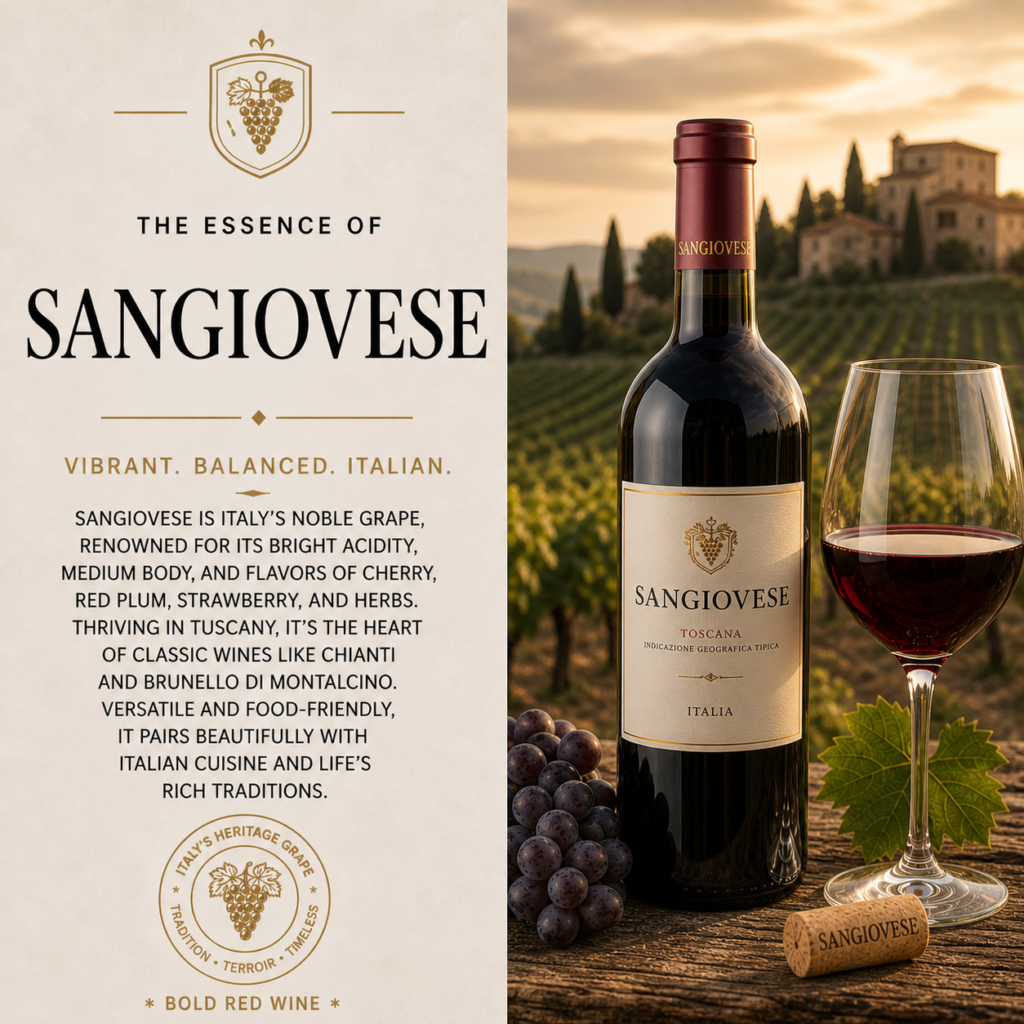
Sangiovese wine is a red wine made from the Sangiovese grape, which is the most widely planted grape in Italy. The name comes from the Latin “sanguis Jovis,” which translates to “blood of Jupiter.” Fitting, given how central the grape is to Italian wine culture.
Most Sangiovese comes from Tuscany. You will see it most often in Chianti, Brunello di Montalcino, and Vino Nobile di Montepulciano. Each of those names is a specific wine region within Tuscany, and each style of Sangiovese wine has its own personality. Learn more on our Sangiovese grape page.
Sangiovese Wine Taste and Characteristics
The first taste of Sangiovese is bright and tart. The wine has high acidity, which is part of what makes it so good with food. Fruit flavors lean toward sour cherry, red plum, and dried tomato. Some people pick up notes of dried herbs, leather, and even a hint of tea leaves.
Tannins are medium to high. The wine has structure and grip, but it is not as bold as a Cabernet Sauvignon. The body sits in the medium range, neither light nor heavy.
Younger Sangiovese tastes brighter and fruitier. Aged Sangiovese, especially in higher-end bottles, develops earthy, complex flavors like dried fig, tobacco, and mushroom. Both styles are great, just very different experiences.
If you enjoy reds that are food-driven rather than fruit bombs, Sangiovese wine will quickly become a favorite.
Where Sangiovese Wine Comes From
Geography matters with Sangiovese more than with most grapes. The same grape produces dramatically different wines depending on where it grows.
Chianti, the most famous region, produces approachable, easy-drinking Sangiovese. Chianti Classico is the higher-quality subregion within Chianti. Look for the black rooster symbol on the bottle as a quality marker.
Brunello di Montalcino is the prestige expression. These wines are 100 percent Sangiovese (a specific clone called Sangiovese Grosso), aged for years, and built to last decades. They cost more, but the depth is real.
Vino Nobile di Montepulciano sits between the two in style and price. Look here for a step up from basic Chianti without the Brunello cost.
Outside Tuscany, you will find Sangiovese growing in California, Argentina, and Australia. These New World versions tend to be fruitier and rounder than Italian originals.
Sangiovese Wine Food Pairings
Sangiovese is one of the most food-friendly red wines in the world. The high acidity and savory profile make it a natural with Italian cuisine, but the pairings go well beyond pasta.
Tomato-based dishes are the obvious move. Pizza, pasta with marinara, lasagna, and chicken parmesan all sing with Sangiovese wine. The wine’s acidity matches the acid in tomatoes, which makes both taste better.
Grilled and roasted meats work beautifully. Try Sangiovese with grilled steak, roasted chicken, lamb chops, or pork tenderloin. The medium tannins handle the protein without overwhelming the dish.
For cheese, lean into Italian options. Parmigiano Reggiano, Pecorino, and aged provolone are reliable picks. Mushroom dishes also shine alongside this wine, especially anything with porcini or truffles.
Even casual food works. A glass of Sangiovese with a meatball sub, a pepperoni pizza, or a charcuterie board makes for an easy, satisfying meal.
How to Serve Sangiovese Wine
A few small adjustments make any bottle of Sangiovese better.
Serve it between sixty and sixty-five degrees Fahrenheit. Slightly cooler than typical room temperature lets the acidity shine. Pull the bottle out of a cool room or fridge about twenty to thirty minutes before serving.
Use a medium to large red wine glass. The wider bowl helps the wine breathe and softens the tannins. Pour a moderate amount, swirl, and give the glass a few minutes before your first sip.
Younger Chianti is ready to drink right away. Brunello and other aged Sangiovese benefit from a quick decant. Pour into a decanter for thirty to sixty minutes before serving.
Is Sangiovese Wine Dry or Sweet?
Sangiovese wine is dry. The fruit flavors can taste bright and tart, but there is no residual sugar in the wine. If you prefer sweet wines, Sangiovese will probably taste sharp and savory rather than fruity in the way you expect.
Some New World Sangiovese from warmer climates can taste a touch riper and softer, but it is still technically a dry wine.
If sweetness is a deal breaker for you, our Perfect Match wine quiz will help you find a style that fits your palate better.
Picking Your First Bottle
A reliable Chianti is the best place to start with Sangiovese wine. Look for a Chianti Classico from a producer like Castello di Ama, Marchesi Antinori, or Ruffino. Expect to spend fifteen to thirty dollars for a solid bottle.
If you want to spend less, basic Chianti DOCG bottles in the ten to fifteen dollar range work fine for casual dinners. For a splurge, try a younger Brunello di Montalcino, which usually starts around fifty dollars.
Frequently Asked Questions
Is Sangiovese wine dry?
Yes, Sangiovese is a dry red wine. The high acidity and tart cherry flavors can sometimes feel bright or sharp on the palate, but there is no real sweetness in the wine.
Is Sangiovese the same as Chianti?
Not exactly. Sangiovese is the grape. Chianti is a wine region in Tuscany that uses Sangiovese as its main grape. Almost all Chianti is made primarily from Sangiovese, but not all Sangiovese is Chianti.
What does Sangiovese taste like?
Sangiovese wine tastes like tart cherry, red plum, dried herbs, and sometimes leather or tobacco. The acidity is high, the tannins are medium to high, and the body is medium. It is a savory, food-friendly red.
Sangiovese vs Cabernet Sauvignon — what’s the difference?
Sangiovese is brighter, more acidic, and more savory. Cabernet is darker, more tannic, and fruitier. Sangiovese pairs better with tomato-based and acidic dishes. Cabernet handles bigger, fattier proteins like a ribeye steak.
How long does Sangiovese age?
Basic Chianti is best within two to four years of the vintage. Chianti Classico Riserva can age ten to fifteen years. Brunello di Montalcino routinely ages twenty to thirty years and improves with time.
Find Your Perfect Match
Wondering if Sangiovese is right for your palate, or whether another red wine style suits you better? Take our Perfect Match wine quiz. Three minutes, twenty questions, one personal wine recommendation. No jargon. No snobbery. Just a clear answer for your next bottle.