Champagne is one of the most famous wines in the world, but it is also one of the most misunderstood. Many people use the word for any sparkling wine. Others think all Champagne wine is sweet. Some assume the bottle on the shelf for fifteen dollars is the same as the one for eighty. None of those things is quite right.
This guide breaks down Champagne wine in plain language. You will learn what makes it different from other sparkling wines, what it tastes like, how to read the label, and which style to try first. Use it alongside our sparkling wine category page to explore the broader category.
What is Champagne Wine?
Champagne wine is a sparkling wine made in the Champagne region of northeastern France. The name is legally protected. A sparkling wine made anywhere else in the world cannot be called Champagne, even if it uses the same grapes and the same method.
The region sits about ninety miles east of Paris. Cool climate, chalky soils, and centuries of tradition produce a sparkling style nobody else has fully matched. Three grapes dominate production. Chardonnay brings elegance and citrus. Pinot Noir brings body and red fruit. Pinot Meunier rounds out the blend with softness.
Read more on our Champagne grape page for additional detail on the production region.
How Champagne Wine is Made
The signature feature of Champagne is its production method, called the méthode champenoise or traditional method. The process is what creates the fine, long-lasting bubbles you find in every bottle.
The winemaker first produces a still base wine. Then they add yeast and sugar to that wine inside the bottle. A second fermentation happens in the bottle itself, which traps the carbon dioxide and produces the bubbles. The wine then ages on the dead yeast cells for at least fifteen months, often much longer. That aging gives Champagne its toasty, biscuity character.
Other sparkling wines use cheaper, faster methods that produce larger, less persistent bubbles. The traditional method is what makes Champagne wine more expensive and more layered than alternatives.
Champagne Wine Taste and Style
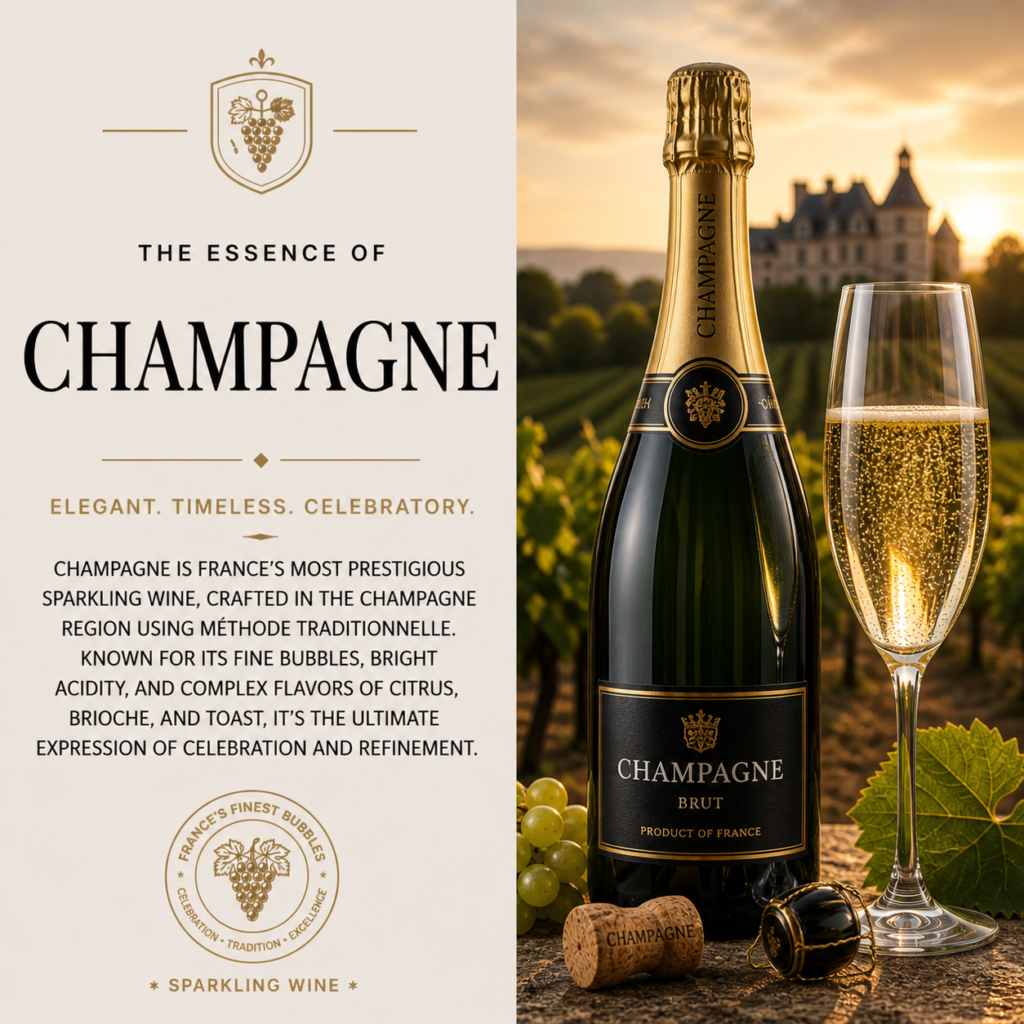
A good glass of Champagne hits the palate with bright acidity, fine persistent bubbles, and a complex mix of flavors.
Fruit flavors include green apple, lemon, pear, and white peach. Yeast aging adds notes of toast, brioche, almond, and biscuit. Aged Champagne develops honey, dried fruit, and even mushroom or truffle. The mouthfeel is creamy from the long aging.
The bubbles in real Champagne wine feel finer and last longer than the bigger, foamier bubbles in Prosecco or Cava. That difference is one of the easiest ways to identify quality.
Brut, Extra Brut, Sec — Decoding Champagne Sweetness
Champagne labels list the sweetness level using specific terms. Knowing them helps you avoid surprises.
Brut Nature has no added sugar. Bone dry. Extra Brut is also very dry with minimal sugar. Brut is the most common style. Technically dry, but with a touch of balance. Extra Dry is slightly sweeter than Brut. (The naming is confusing.) Sec is noticeably sweet. Demi-Sec is sweet, often served with dessert. Doux is the sweetest style and rare to find.
If you are new to Champagne wine, start with Brut. It is the standard and pairs with the widest range of food. For a deeper look at sweetness in wine generally, see our dry vs sweet wine guide.
Champagne vs Prosecco vs Cava
The three biggest sparkling wines on the market each have their own personality.
Champagne is French, made with the traditional method, and aged for fifteen months minimum. Expect toast, almond, and bright acidity. Price range: forty to several hundred dollars.
Prosecco is Italian, made with the tank method, and bottled young. The bubbles are bigger and fruitier. Expect pear, apple, and floral notes. Price range: ten to twenty-five dollars. Browse our Prosecco page for more.
Cava is Spanish, also made with the traditional method, and offers strong value. Expect citrus, green apple, and a creamy texture. Price range: ten to thirty dollars.
Champagne wine is the gold standard, but Cava delivers the closest experience for a fraction of the price.
Champagne Wine Food Pairings
Champagne is one of the most food-flexible wines in the world. The high acidity and bubbles refresh the palate between bites.
Salty snacks like potato chips, popcorn, and fried foods are surprisingly excellent matches. The bubbles cut through fat, and the acidity balances the salt. For more elegant pairings, try Champagne with raw oysters, sushi, smoked salmon, and crab.
For full meals, Brut Champagne works with roasted chicken, light pasta, sushi, and pretty much any seafood. Demi-Sec pairs with desserts, especially fruit-based ones. For more food matches across wine styles, see our wine pairings page.
Avoid pairing Champagne with bold red sauces, heavy red meats, or chocolate. Those flavors overwhelm the wine.
How to Serve Champagne Wine
A few simple rules make every bottle taste better.
Serve Champagne very cold, between forty-three and forty-eight degrees Fahrenheit. Pull the bottle from the fridge thirty minutes before opening, or chill in an ice bucket for twenty minutes. Our wine serving temperature guide covers the details.
Use a tulip-shaped flute or a white wine glass. Skip the wide coupe glass, which lets the bubbles dissipate too quickly. Our wine glass guide covers the right shape for each style.
Open the bottle carefully. Hold the cork firmly with one hand and rotate the bottle (not the cork) with the other. Let the cork ease out with a gentle sigh, not a loud pop. The pop wastes carbonation.
For storing leftover Champagne wine, see our how to store wine guide.
Picking Your First Champagne
A standard non-vintage Brut from a major house is the best starting point. Producers like Veuve Clicquot, Moët et Chandon, and Pol Roger consistently deliver quality at around fifty to seventy dollars.
For smaller-budget exploration, look for grower Champagnes from small producers. These bottles often offer more character at forty to sixty dollars. Look for the letters “RM” on the back label, which means “récoltant-manipulant” or grower-producer.
For special occasions, vintage Champagne or prestige bottles like Dom Pérignon or Cristal deliver the full experience at significantly higher prices.
Frequently Asked Questions
Is Champagne wine always dry?
Most Champagne wine sold today is Brut, which is technically dry. Some styles like Demi-Sec and Doux are noticeably sweet. The label always lists the style, so check before buying.
What is the difference between Champagne and sparkling wine?
All Champagne is sparkling wine, but not all sparkling wine is Champagne. Champagne is a legal designation for sparkling wine from the Champagne region of France made by specific methods. Other sparkling wines like Prosecco, Cava, and California sparkling use the same idea but with different rules.
Does Champagne wine have a lot of calories?
A standard five-ounce glass of Brut Champagne has roughly 90 to 120 calories. That is on the lower end for wine. Sweeter Champagne styles have more calories. Our calories in wine guide covers the full picture.
How long does Champagne last after opening?
About one to three days even with a special sparkling wine stopper. The bubbles will fade, but the wine remains drinkable. For best flavor, finish the bottle the day you open it.
What does Champagne wine taste like?
Quality Champagne tastes like green apple, citrus, and white peach with toasty notes of brioche and almond from yeast aging. The mouthfeel is creamy and the acidity is bright. The bubbles are fine and persistent.
Find Your Perfect Match
Whether you love bone-dry Brut Nature or richer Demi-Sec, the right Champagne wine is out there for your palate. Take our Perfect Match wine quiz and get a personal recommendation in three minutes. No snobbery, no jargon, just a clear answer for your next celebration.