Walk into any kitchen store and the wine glass section can feel completely overwhelming. Bordeaux glasses, Burgundy glasses, universal glasses, stemless options, crystal versus regular glass. It is a lot. But here is the truth: wine glasses for beginners do not need to be complicated. You do not need a dozen different shapes to enjoy wine at home. This guide cuts through the noise and tells you exactly what to buy, why it matters, and how to keep things simple while still getting the most out of every pour.
Does the Glass Shape Actually Matter
The short answer is yes, but probably not as much as glassware companies would like you to believe.
The shape and size of a wine glass does influence how the wine smells and tastes. A wider bowl allows more air to interact with the wine, which releases aromas and softens the flavors. A narrower bowl preserves freshness and keeps the wine cooler. The rim of the glass affects how the wine hits your palate when you sip.
That said, for most casual home drinkers, the difference between a dedicated Cabernet glass and a universal glass is subtle. What matters far more is that you are using a stemmed glass with a proper bowl shape rather than sipping from a tumbler or a coffee mug.
As a beginner, do not stress about owning the perfect glass for every wine. Focus on getting a solid, versatile option that works well across multiple styles. You can always expand your collection later as your palate develops.
The Simple Two-Glass System for Beginners
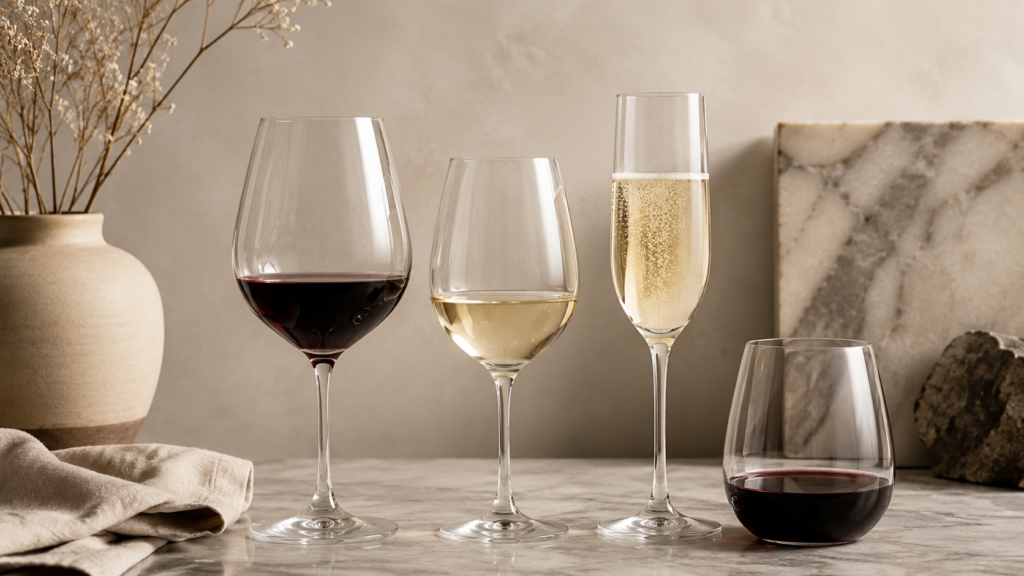
The easiest starting point for wine glasses for beginners is what is sometimes called the two-glass system. The idea is straightforward. You need one larger glass for red wines and one smaller glass for white wines. That covers the vast majority of what most people drink at home.
Red Wine Glasses
Red wine glasses have a larger bowl. This extra space allows the wine to breathe, releasing complex aromas and softening tannins. Wines like Cabernet Sauvignon, Merlot, and Syrah benefit from the height and openness of a Bordeaux-style glass, which directs wine toward the back of the palate. For lighter reds like Pinot Noir, a rounder Burgundy-style bowl captures subtle floral and earthy aromatics especially well.
White Wine Glasses
White wine glasses are slimmer with a smaller bowl. The narrower shape helps maintain a cooler temperature, which matters because white wines are almost always served chilled. The slender design also concentrates delicate fruit aromas near the rim so you can appreciate them with each sip.
The Case for a Universal Wine Glass
If the two-glass system still feels like too much, there is an even simpler option: the universal wine glass.
A universal wine glass has a medium-sized bowl with a gentle inward taper at the top. It works reasonably well for red wine, white wine, rosé, and even sparkling wine in a pinch. The medium bowl and gentle taper create a balanced environment for a wide range of wine styles.
Universal glasses are ideal for anyone who wants to avoid multiple shapes, maintain minimalist storage, or host casual gatherings without needing specialized glassware. If you live in a smaller apartment or simply do not want to clutter your cabinets, a set of quality universal glasses is a smart and practical solution.
As a beginner, it is perfectly fine to start with a single versatile glass. While specific glasses can enhance different wines, you do not need to invest in multiple types right away.
Stemmed vs. Stemless: Which Should You Choose
Stemless wine glasses have become popular in recent years. They look modern, they are easier to store, and they are less likely to tip over. For casual outdoor gatherings, they are genuinely practical.
However, stemmed glasses remain the better choice for most beginners for one important reason: temperature control. The stem allows you to hold the glass without your hand warming the wine. White wines and rosés in particular are sensitive to temperature, and a few minutes of palm heat can noticeably affect how they taste.
Stemmed glasses also improve swirling stability, which helps release aroma even when you are still learning how to swirl without splashing. And from a visual standpoint, stemmed glasses keep the bowl free of fingerprints, which makes the color of the wine easier to appreciate.
The practical verdict: use stemmed glasses when you are sitting down to actually taste and enjoy wine. Stemless glasses are fine for casual backyard sipping where convenience matters more than precision.
Crystal vs. Regular Glass: What You Need to Know
Crystal wine glasses are thinner, lighter, and often have a finer rim than regular glass. The thinness of the rim makes sipping feel more refined and some drinkers find it genuinely enhances the experience. Crystal also tends to have a slight sparkle that makes wine look especially appealing in the glass.
The downside is that crystal is more fragile and often significantly more expensive. For beginners who are still figuring out their preferences and building a routine around wine, high-end crystal is not a necessary investment right away.
Lead-free crystal offers a middle ground. It provides much of the clarity and lightness of traditional crystal without concerns about lead content. Many well-regarded brands now produce lead-free crystal sets at prices that are accessible for everyday use.
Regular glass is perfectly fine to start with. It is durable, easy to clean, and available at nearly every price point. As your interest in wine deepens, you can always upgrade to crystal over time.
How to Care for Your Wine Glasses
Good wine glasses do not need constant replacement if you care for them properly. A few simple habits make a real difference.
Hand washing is almost always the safer option, even for glasses labeled dishwasher-safe. The high heat and harsh detergents in dishwashers can cloud glass over time and leave residue that affects how wine smells in the glass.
Use a mild soap and a soft sponge. Rinse thoroughly to remove any soap residue. After washing, dry your glasses with a lint-free cloth to prevent water spots and keep them looking clean.
Store your glasses upright rather than upside down when possible. Storing them upside down can trap musty odors inside the bowl, which you will notice the next time you pour wine.
Finally, hold glasses by the stem during washing and use, not by the bowl. This protects the most delicate part of the glass and keeps your body heat away from the wine.