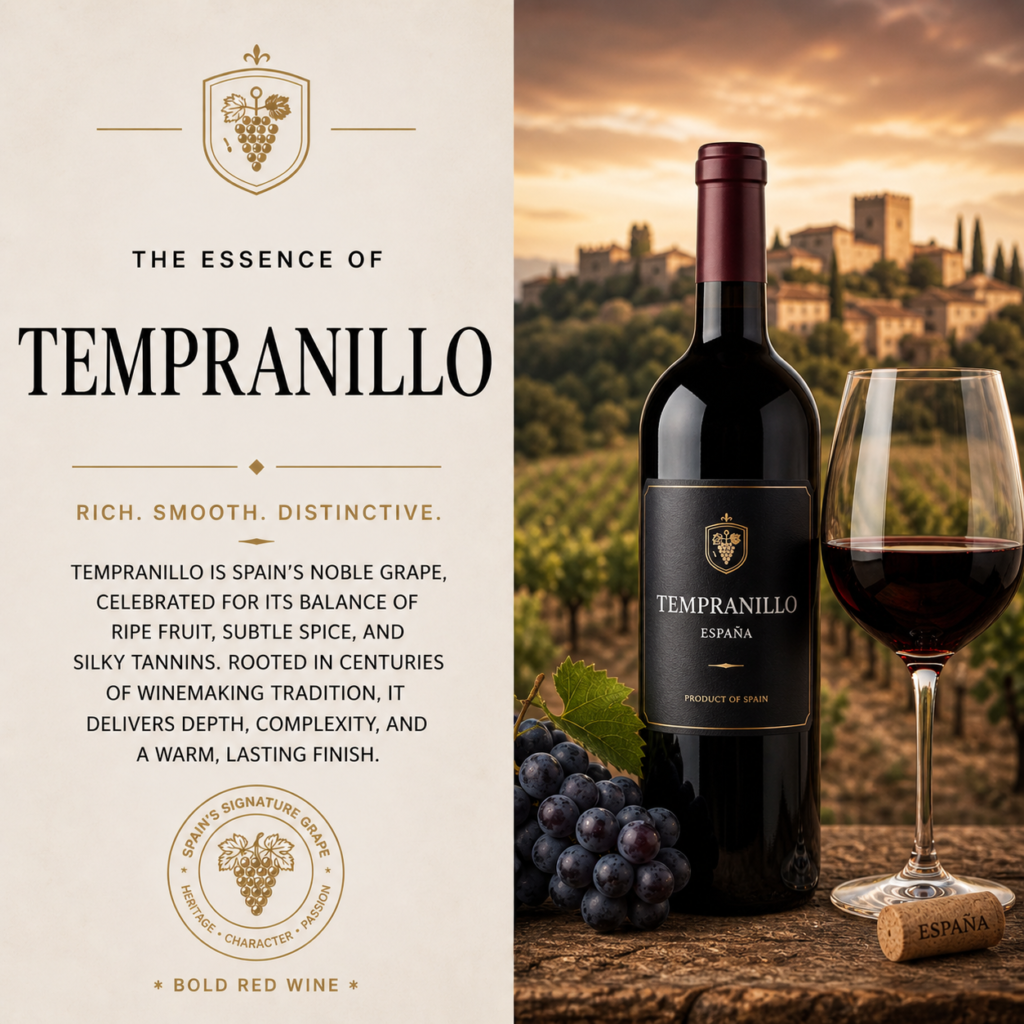
Tempranillo is the most important red grape in Spain and one of the most underrated in the world. It is the backbone of Rioja, it appears in Ribera del Duero, and it goes by half a dozen different names depending on which valley you are standing in.
And yet plenty of people who have drunk a lot of Rioja have never registered what the grape itself actually tastes like.
Here is the answer to what does Tempranillo taste like. Tempranillo tastes of red cherry and dried fig, with leather, tobacco, and a distinctive vanilla-dill note from oak aging. It is dry, medium to full bodied, and savory rather than fruity.
What Does Tempranillo Taste Like: The Core Profile
The color is deep ruby, darker than Pinot Noir, not quite as opaque as Syrah.
On the nose you get red fruit first: cherry, plum, and dried strawberry. Behind it, and this is the signature, comes a wave of vanilla, coconut, and something like fresh dill or sweet cedar. That combination is unusual and it comes almost entirely from the American oak barrels Spanish producers traditionally use.
On the palate the fruit steps back and savory takes over. Leather, tobacco leaf, dried fig, and a mineral, slightly dusty quality. There is often a tomato or sun-dried tomato edge.
The tannins are moderate and fine-grained, more velvet than sandpaper. Acidity is medium to high, which keeps the wine lively. Alcohol usually sits between 13 and 14.5 percent.
The overall impression is a savory, aromatic red wine that smells sweeter than it tastes.
That Vanilla Note Is Oak, Not Sugar
This is the single biggest source of confusion when people ask what does Tempranillo taste like, and it trips people up constantly. Tempranillo is bone dry. But the aroma of vanilla, coconut, and sweet spice is so pronounced that people expect sweetness on the palate and are surprised when it does not arrive.
Blame American oak. Spanish winemakers have used it for generations, and American oak gives up much more vanillin and coconut lactone than French oak does. It is a stylistic choice, and it is a large part of what makes Rioja smell like Rioja.
Modern producers increasingly use French oak, which gives a subtler, spicier profile. Both approaches are legitimate. If you find the coconut note distracting, look for producers who mention French oak.
The Aging Classifications
The answer to what does Tempranillo taste like changes dramatically with age, and the Spanish system tells you exactly how. It is genuinely useful, unlike most wine label systems, because it tells you exactly what you are getting.
Joven means young, with little or no oak. Fresh, fruity, bright cherry, meant to be drunk immediately. Cheap and cheerful.
Crianza is aged at least two years, with at least one in oak. This is the sweet spot for value. You get the leather and vanilla starting to emerge while the fruit is still vivid.
Reserva is aged at least three years, with at least one in oak. More leather, more dried fruit, softer tannins. Noticeably more complex.
Gran Reserva is aged at least five years, with at least two in oak. Made only in strong vintages. Tertiary flavors take over: leather, mushroom, dried fig, tobacco. Silky, savory, and long.
The practical advice: a Rioja Reserva is one of the best value propositions in all of wine. You are buying a bottle that has already been aged for years, at a price that would buy you a young, unremarkable wine almost anywhere else. Our wine terminology page covers what these aging terms mean in more detail.
Rioja vs Ribera del Duero
Two regions, one grape, very different results.
Rioja is the classic. Cooler climate, more elegant, more aromatic. The Tempranillo here is often blended with Grenache, which adds body and red fruit. Leather, vanilla, red cherry, restraint.
Ribera del Duero sits at higher altitude with more extreme temperatures. The wines are darker, denser, more powerful, with black fruit rather than red and more grip. Tempranillo here goes by Tinto Fino or Tinta del Pais.
If you want elegance, Rioja. If you want power, Ribera.
Tempranillo also shows up in Toro, in Portugal as Tinta Roriz where it goes into Port, and increasingly in Australia, Texas, and California.
How It Compares to What You Already Drink
The fastest way to understand what does Tempranillo taste like is by comparison. Against Cabernet Sauvignon: Tempranillo is lighter, less tannic, and more aromatic. Cabernet is blacker, denser, and more structured. Both are savory, but Tempranillo carries that vanilla-dill signature Cabernet never has.
Against Pinot Noir: Tempranillo has more body, more tannin, and more oak. Pinot is more delicate and more purely fruit-driven.
Against Merlot: Tempranillo is more savory and less plush. Merlot is softer and rounder.
Against Sangiovese: these are cousins in spirit. Both are savory, high acid, food-focused. Sangiovese is more tart and herbal, Tempranillo more leathery and oak-influenced.
If you like Cabernet but want something with more perfume, or you like Chianti but want more weight, Tempranillo is the bridge between them.
Food Pairings
This is a food wine through and through. Its savory character and moderate tannins mean it slots in almost anywhere a red wine belongs.
The standout pairings:
- Lamb. The single best match. The gaminess and the leather notes lock together. Our wine with lamb guide covers the range
- Roast pork, particularly with herbs or a char
- Grilled steak. A Reserva against a ribeye is a serious pairing, and our wine with steak guide explains why
- Chorizo, jamon, and cured meats. This is what the wine grew up with
- Manchego and other aged sheep cheeses
- Smoky, grilled, or charred anything. The oak character loves smoke
- Paella, especially with meat
Avoid it with delicate fish and with heavily spiced food, where the oak turns bitter.
Serving Notes
Serve at 60 to 65 degrees, which means slightly cooler than most rooms. Twenty minutes in the fridge before pouring.
Young Joven and Crianza bottles are ready immediately. A Reserva benefits from thirty minutes of air. A Gran Reserva can be decanted, though old bottles have fragile fruit and can fade quickly once opened, so do not overdo it.
Standard red wine glass is fine.
Who Should Try It
Now that you know what does Tempranillo taste like, the question is whether it suits you. Tempranillo suits people who want a red wine with genuine complexity and character, without the tannic weight of a Cabernet or the price of a Burgundy.
It is one of the best value grapes in the world. A Rioja Reserva at eighteen dollars delivers what a fifty-dollar wine delivers almost anywhere else, because Spain has simply never charged what its wine is worth.
If you are drinking Merlot and want more interest, or drinking Cabernet and want more perfume, or drinking Chianti and want more body, this is where to go next.
Start with a Rioja Crianza. It is inexpensive, widely available, and it shows the grape’s personality clearly. If it lands, move up to a Reserva and watch it deepen.
Not sure it is your style? Take the quiz and we will help you narrow it down.
FAQs
Is Tempranillo sweet or dry?
Tempranillo is dry. The vanilla and coconut notes from oak aging can read as sweetness on the nose, but there is no residual sugar in the wine.
Is Rioja the same as Tempranillo?
Not quite. Rioja is a region in Spain, and Tempranillo is the main grape grown there. Most Rioja is predominantly Tempranillo, but Rioja can legally include Grenache and other grapes.
What is the difference between Crianza, Reserva, and Gran Reserva?
These are aging classifications. Crianza is aged at least two years, Reserva at least three, and Gran Reserva at least five. More aging means more oak influence, softer tannins, and more leather and dried fruit character.
Is Tempranillo similar to Cabernet Sauvignon?
They share a savory backbone, but Tempranillo is lighter, less tannic, and more overtly oaky, with a distinct dill and vanilla character. Cabernet is denser, darker, and more structured.
What food goes best with Tempranillo?
Lamb, roast pork, grilled steak, chorizo, and hard cheeses like Manchego. It handles smoke and char particularly well.