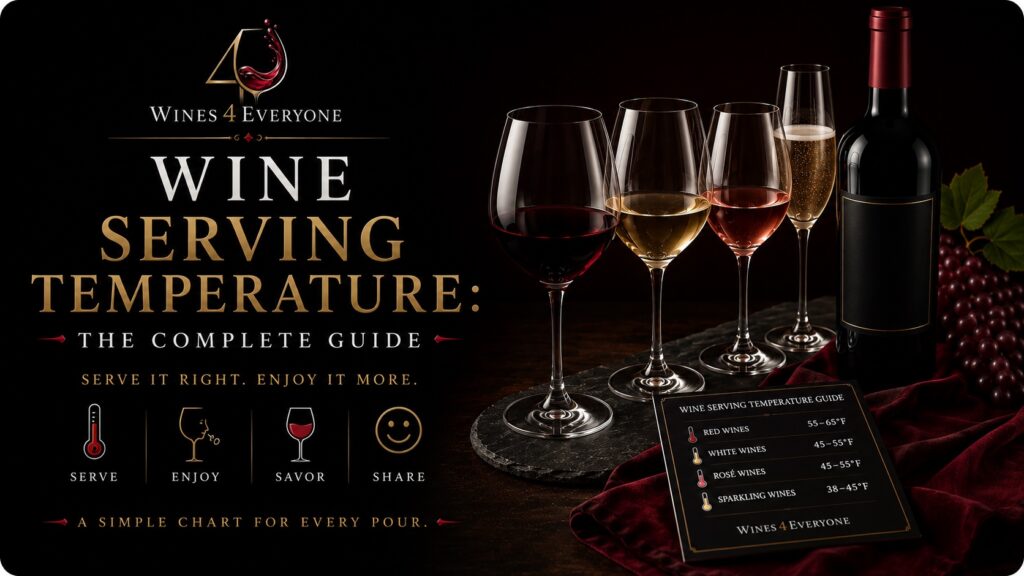
Wine Serving Temperature Chart & Guide
Serving wine at the right temperature can completely change how it tastes. Wine that is too warm can feel heavy, flat, or overly alcoholic. Wine that is too cold can hide its aromas, flavors, and texture.
The good news is simple: you do not need perfect precision. You just need the right general range for the style of wine you are pouring.
Use this wine serving temperature chart as a simple guide for red, white, rosé, sparkling, and dessert wine.
Best Serving Temperature + Simple Rule
38°F–45°F – Serve well chilled
Best Serving Temperature + Simple Rule
40°F–50°F – Serve crisp and cold
Best Serving Temperature + Simple Rule
45°F–55°F | Serve chilled, not icy
Best Serving Temperature + Simple Rule
45°F–55°F | Serve chilled and refreshing
Best Serving Temperature + Simple Rule
55°F–60°F | Serve slightly chilled
Best Serving Temperature + Simple Rule
60°F–65°F | Serve cool, not warm
Best Serving Temperature + Simple Rule
45°F–55°F | Serve chilled, depending on style
The biggest mistake is assuming all red wine should be served at “room temperature.” Modern room temperature is often too warm for red wine. Most reds taste better when they are slightly cool.
Wines4Everyone · Serving Guide
Wine Serving Temperature
The right temperature can make wine taste brighter, smoother, and more balanced. Learn how to serve red, white, rosé, and sparkling wine at their best.
The Simple Rule
Serve Wine Cooler Than You Think
Build Your Foundation
Better Wine Starts With the Basics
Go Deeper
Temperature Tips by Wine Style
From the Blog
More Guides for Better Pours
Chill, Pour, Enjoy
The Right Temperature Makes Wine Taste Better
You do not need to be exact. Serve sparkling wine cold, white and rosé chilled, and red wine cool instead of warm.
Learn How to Store Wine →Quick Reference
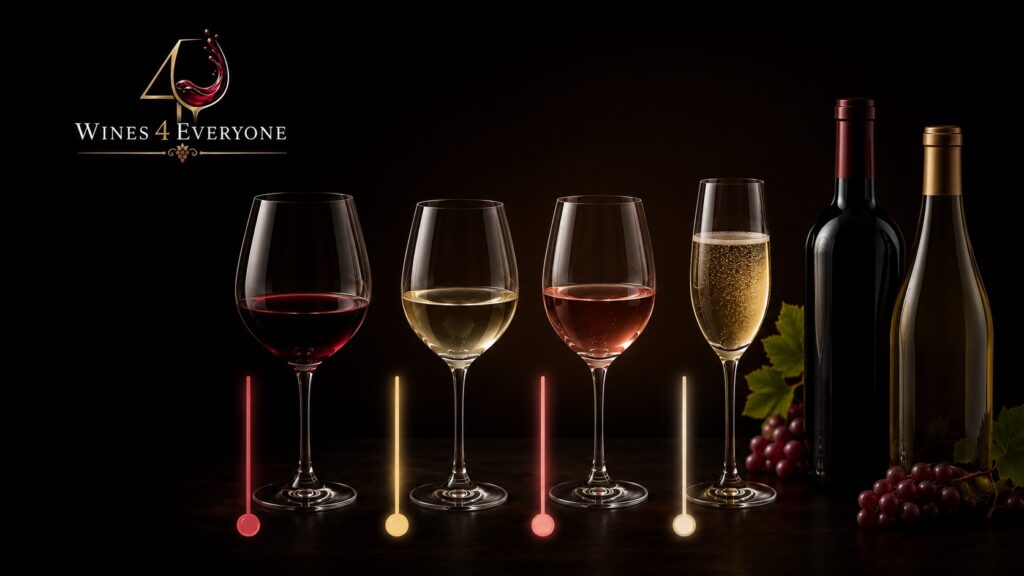
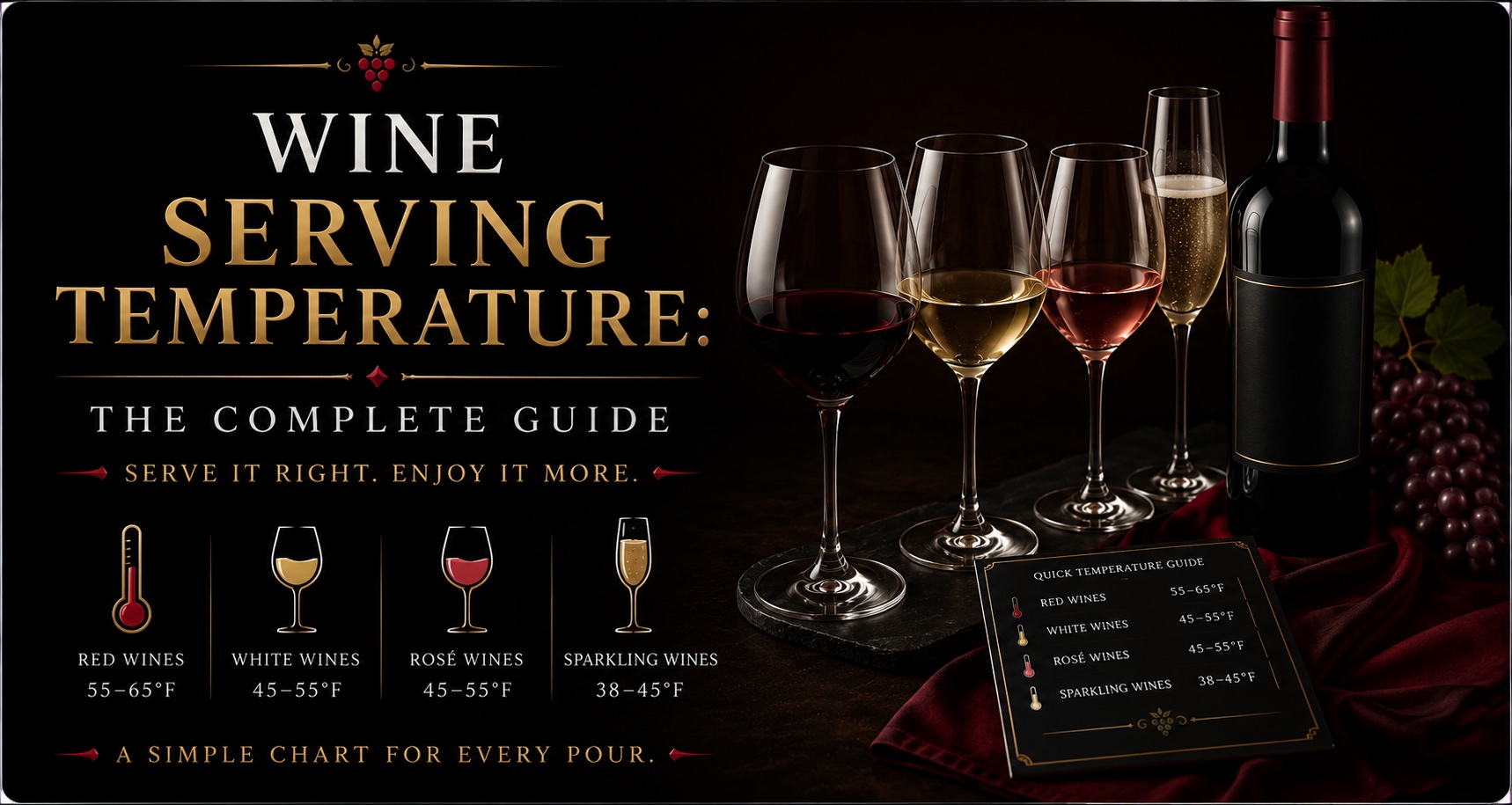
Wine Serving Temperature Chart
Use this simple chart as your go-to guide for serving red, white, rosé, sparkling, and dessert wine at the right temperature.
| Wine Type | Best Serving Temperature | Simple Serving Rule |
|---|---|---|
| Sparkling Wine | 38°F–45°F | Serve well chilled to keep bubbles crisp and refreshing. |
| Light White Wine | 40°F–50°F | Serve cold to highlight acidity, freshness, and clean fruit flavors. |
| Full-Bodied White Wine | 45°F–55°F | Serve chilled, not ice cold, so texture and aroma can open up. |
| Rosé Wine | 45°F–55°F | Serve chilled and refreshing, especially for dry or fruit-forward rosé. |
| Light Red Wine | 55°F–60°F | Serve slightly chilled to keep the wine bright, smooth, and easy to drink. |
| Medium to Full-Bodied Red Wine | 60°F–65°F | Serve cool, not warm, so alcohol does not overpower the flavor. |
| Dessert Wine | 45°F–55°F | Serve chilled to balance sweetness and keep the finish clean. |
Tip: when in doubt, serve wine slightly cooler. It will warm naturally in the glass.
Sommelier's Companion
How to Taste Wine
Tasting wine is a skill anyone can learn. Master it in five simple steps — see, swirl, smell, sip, and savor like a pro.
- 01See Tilt the glass against a white background. Note the color, depth, and clarity — they hint at age, grape, and body.
- 02Swirl Gently swirl to open the wine up. This releases aromas and reveals the "legs" that streak down the glass.
- 03Smell Take a short sniff, then a deeper one. Fruit, floral, oak, or earth — most of what you "taste" is really smell.
- 04Sip Take a small sip and let it coat your whole palate. Notice the sweetness, acidity, tannin, and body.
- 05Savor Pay attention to the finish — the flavors that linger after you swallow. The longer it lasts, the finer the wine.
Wine Storage vs. Wine Serving Temperature
Wine Serving Temperature
Wine storage temperature and wine serving temperature are not the same thing.
Storage is about keeping wine safe and stable before you drink it. Serving temperature is about making the wine taste its best in the glass.
Most wine should be stored in a cool, consistent place away from heat, sunlight, and major temperature swings. Then, before serving, adjust the bottle based on the wine style.
For more detail, read our guide on How to Store Wine.
Ready for a Better Pour?
The right temperature matters
The right temperature makes wine easier to enjoy. You do not need fancy equipment or expert-level precision. Just chill whites, rosés, and sparkling wines properly, and give red wines a slight cool-down before serving.
A few degrees can make the difference between a wine that tastes flat and a wine that feels balanced, fresh, and full of flavor.
Ready to Find Your Perfect Wine Match?
Answer a few simple questions about your taste, food preferences, and wine style. We’ll help point you toward wines you’re more likely to enjoy.
Frequently Asked Wine Tasting Questions
1. What is the best wine serving temperature?
The best wine serving temperature depends on the style of wine. Sparkling wine is best served well chilled, white and rosé wines are best served chilled, and red wines usually taste better slightly cool instead of warm. For a full beginner-friendly guide, visit our Wine Types Guide.
2. What temperature should red wine be served at?
Most red wines should be served slightly cool, usually around 55°F to 65°F. Light reds like Pinot Noir taste great with a gentle chill, while fuller reds like Cabernet Sauvignon and Merlot should be cool but not cold. Learn more in our Red Wine Guide.
3. Should red wine be chilled?
Yes, many red wines taste better with a slight chill. Red wine served too warm can taste heavy, flat, or overly alcoholic. Place the bottle in the refrigerator for about 15 to 30 minutes before serving, depending on the style.
4. What temperature should white wine be served at?
White wine is usually best served between 40°F and 55°F. Crisp white wines like Sauvignon Blanc and Pinot Grigio can be served colder, while fuller white wines like Chardonnay taste better slightly warmer. Explore more styles in our White Wine Guide.
5. What temperature should rosé wine be served at?
Rosé wine is best served chilled, usually around 45°F to 55°F. This keeps the wine crisp, fresh, and refreshing without hiding the fruit and floral notes. For more, visit our Rosé Wine Guide.
6. What temperature should sparkling wine be served at?
Sparkling wine should be served well chilled, usually around 38°F to 45°F. A colder temperature helps preserve the bubbles and keeps the wine bright and refreshing. Learn more in our Sparkling Wine Guide.
7. Can wine be served too cold?
Yes. Wine served too cold can lose aroma, flavor, and texture. This is especially true for rich white wines and many red wines. If a wine tastes muted or flat, let it sit in the glass for a few minutes and warm slightly.
8. Can wine be served too warm?
Yes. Wine served too warm can taste heavy, sharp, or overly alcoholic. This is one of the most common red wine serving mistakes. A short chill can help bring the wine back into balance. For storage tips, read our guide on How to Store Wine.
9. What is the fastest way to chill wine?
The fastest way to chill wine is to place the bottle in an ice bucket with both ice and water. This chills wine faster than ice alone because the cold water surrounds the bottle more evenly. Avoid leaving wine in the freezer too long.
10. Is wine storage temperature the same as serving temperature?
No. Wine storage temperature is about keeping wine stable before you drink it, while serving temperature is about making the wine taste its best in the glass. Store wine in a cool, consistent place, then chill or warm the bottle slightly before serving. Learn more in our How to Store Wine guide.
11. What is the easiest wine temperature rule for beginners?
The easiest rule is: serve sparkling wine cold, white and rosé wine chilled, light red wine slightly chilled, and bold red wine cool but not warm. For a simple comparison of styles, read our guide to Red vs. White Wine.
12. Do I need a wine thermometer?
No, you do not need a wine thermometer. Exact temperature is less important than getting close to the right range. When in doubt, serve wine a little cooler because it will naturally warm up in the glass.
Ready to Find Your Perfect Food Pairing?
Whether you’re serving Cabernet Sauvignon, Chardonnay, Pinot Noir, or Rosé, the right meal can make all the difference. Answer a few quick questions and receive personalized food recommendations tailored to the wine you’re enjoying.