A crisp glass of dry white wine has a way of making any meal feel a little more special. From a chilled Sauvignon Blanc on a summer patio to a buttery Chardonnay with roast chicken, dry white wine types are some of the most versatile pours in the world. The trick is knowing which one fits your taste. This guide walks through the main dry white wine types, what makes each one different, and how to find your favorite without trial and error.
What Makes a White Wine Dry?
A wine is considered dry when most or all of the grape sugar has been converted to alcohol during fermentation. With very little residual sugar left behind, the wine tastes crisp rather than sweet. Dry white wine types can still have fruit-forward flavors like green apple, lemon, or peach. The difference is that those fruit notes come from the grape rather than from leftover sugar. To compare the two ends of the spectrum, see our guide on dry versus sweet wine.
The Most Popular Dry White Wine Types
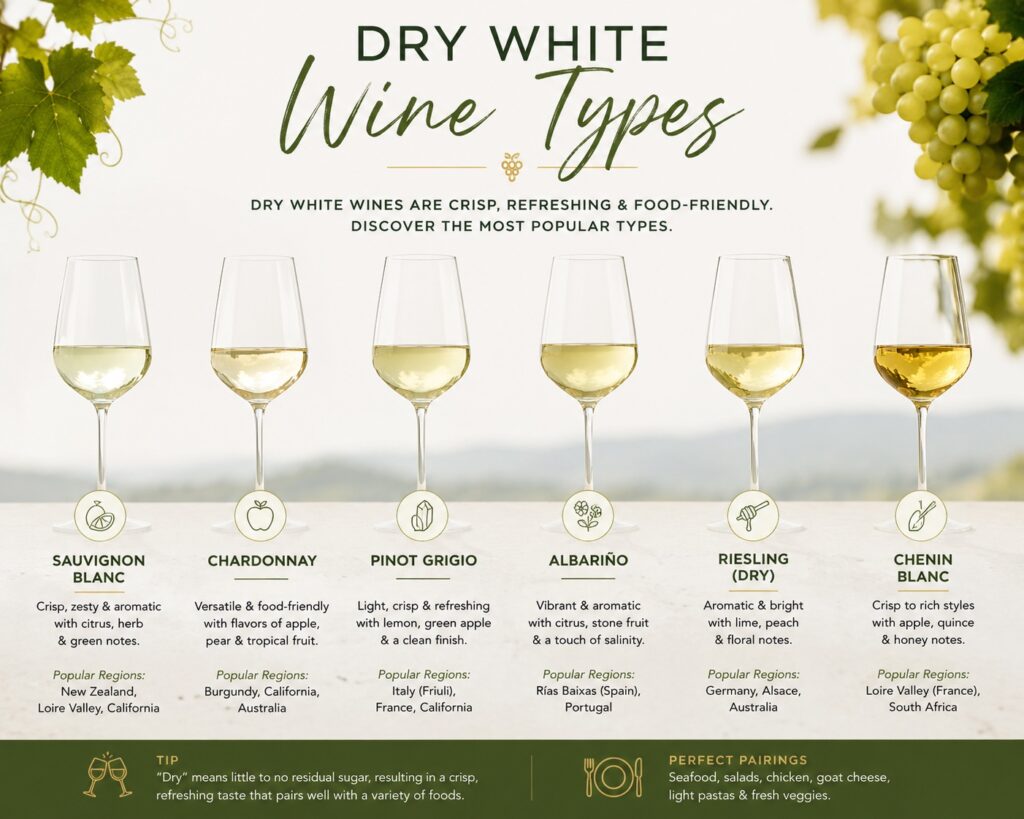
A few grapes dominate the dry white category. Each one offers a different personality in the glass.
Sauvignon Blanc
Sauvignon Blanc is one of the most popular dry white wine types worldwide. The grape produces bright, zesty wines with grass, citrus, and tropical fruit notes. New Zealand examples lean herbal and grapefruit-forward. Loire Valley versions show flint and stone. For more on this grape, visit our Sauvignon Blanc profile.
Pinot Grigio
Pinot Grigio is the everyday workhorse of dry white wine types. The wine is light, refreshing, and easy to drink. Italian Pinot Grigio leans crisp with notes of pear and lemon. Alsatian Pinot Gris, while spelled differently, comes from the same grape but produces fuller-bodied wines. Browse our Pinot Grigio profile for more.
Dry Chardonnay
Not all Chardonnay is buttery and oaky. Many regions produce dry, unoaked Chardonnay that highlights the grape’s natural citrus and apple flavors. Chablis from Burgundy is the most famous example. The wine is mineral, lean, and elegant. For more on this incredibly versatile grape, see our Chardonnay profile.
Albariño
Albariño is a Spanish white wine grape that has earned a strong following. The wines are zippy, citrusy, and slightly saline, which makes them outstanding with seafood. Most Albariño comes from Rías Baixas in northwest Spain.
Grüner Veltliner
Grüner Veltliner is Austria’s signature white wine grape. The wines combine green apple, white pepper, and a fresh herbal edge. The unique pepper note makes Grüner one of the more distinctive dry white wine types worth trying.
How to Spot a Dry White on the Label
Wine labels rarely use the word “dry” directly, but a few clues help. Sauvignon Blanc, Pinot Grigio, Albariño, and Grüner Veltliner are almost always dry. Look for the word “brut” on sparkling whites, which means very dry. Higher alcohol content, usually 12.5 percent or higher, often signals a drier wine because more sugar has been converted to alcohol. Regional names like Sancerre, Pouilly-Fumé, and Chablis are also reliable indicators of dryness. To explore the full dry category, visit our dry wine pillar page.
Best Food Pairings for Dry White Wines
Dry white wine types are some of the most food-friendly wines you can pour. Sauvignon Blanc shines with goat cheese, salads, herbs, and white fish. Pinot Grigio works beautifully with light pasta, antipasti, and lighter seafood. Dry Chardonnay pairs with roast chicken, creamy pasta, and richer fish like halibut. Albariño was practically made for shellfish, especially oysters and shrimp. Grüner Veltliner pairs surprisingly well with vegetables, asparagus, and even spicy Asian dishes. For more pairing ideas, our white wine pillar page has a complete reference.
Serving Dry White Wines the Right Way
Temperature changes everything with dry white wine. Serve too cold and you mute the aromatics. Serve too warm and the wine feels flabby. Most dry white wine types do best at 45 to 50 degrees Fahrenheit. Lighter styles like Sauvignon Blanc benefit from the cooler end of that range. Fuller-bodied styles like oaked Chardonnay show better closer to 50 to 55 degrees. Pull the bottle from the fridge 15 minutes before serving. Use a tulip-shaped wine glass that channels the aromas toward your nose.
FAQs About Dry White Wine Types
What is the driest white wine?
The driest white wines tend to be Sauvignon Blanc from Sancerre, Chablis-style Chardonnay, dry Riesling Trocken, Albariño, and brut sparkling wines. These wines have almost no residual sugar.
Is Pinot Grigio always dry?
Yes, Pinot Grigio is almost always made in a dry style. Italian Pinot Grigio is typically crisp and light. Alsatian Pinot Gris is fuller-bodied but still dry to off-dry in most cases.
Are dry white wines better for beginners?
Some beginners love dry whites for their crisp, food-friendly nature. Others find them too sharp at first. Pinot Grigio and lightly oaked Chardonnay are often the easiest dry white wine types for new drinkers.
What food pairs best with dry white wine?
Dry white wine types pair beautifully with seafood, salads, chicken, light pastas, and creamy cheeses. The acidity in dry whites cleanses the palate between bites and balances rich dishes.
Can dry white wines be sweet-tasting?
Dry white wines can taste fruity but should not taste sweet. If a wine has noticeable sweetness, it has residual sugar and falls into the off-dry or sweet category instead.
Ready to Find Your Favorite Dry White Wine?
Building confidence with dry white wine types is one of the most rewarding parts of learning about wine. Start with one style, find what you love about it, and branch out from there. Visit our white wine guide to keep exploring.