
Organic Wine
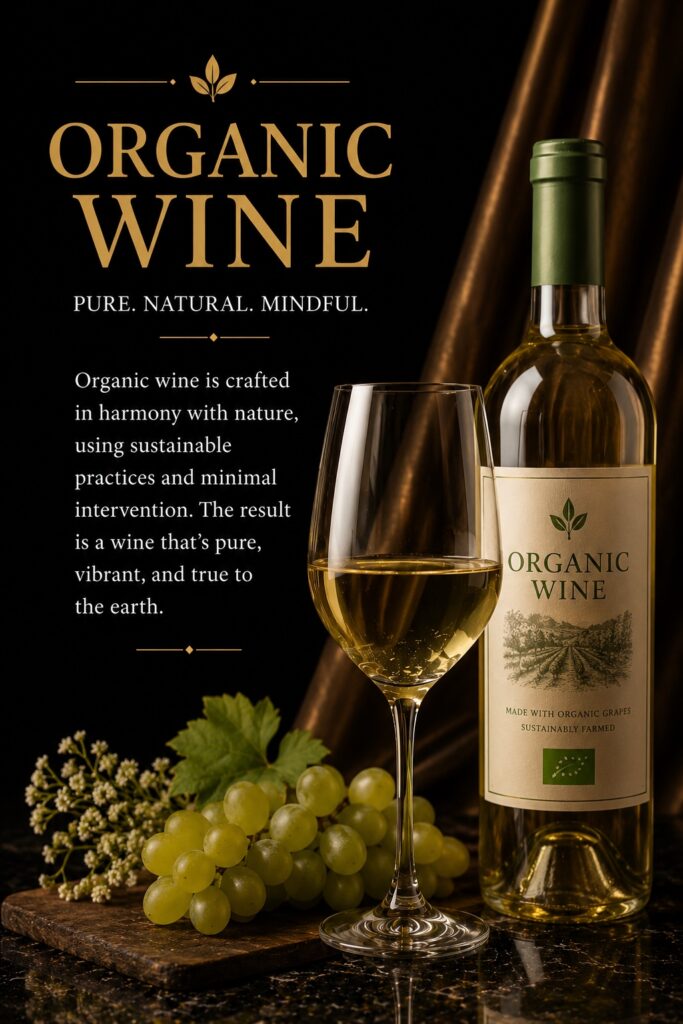
Organic wine is made from grapes grown without synthetic pesticides, fertilizers, or herbicides. From the vineyard to the bottle, organic wine prioritizes clean farming and natural winemaking. The result is a wine that reflects the land, the grape, and the season in a more honest way.
More wine drinkers are looking for transparency in what they pour, and organic wine answers that demand. It offers clean flavor, lower sulfite levels, and a smaller environmental footprint. Whether you are new to wine or already a fan, organic wine opens the door to a thoughtful and flavorful experience.
ORGANIC WINE

ORGANIC GRAPES
SUSTAINABLE VINEYARDS
CLEANER FARMING
LOW INTERVENTION
NATURAL FLAVORS
EARTH FRIENDLY
PURE EXPRESSION
VINEYARD DRIVEN
MINDFUL WINEMAKING
NO SYNTHETIC PESTICIDES
BETTER BOTTLES
CLEAN & PURE
Organic wines are made without synthetic pesticides or herbicides. Every step of production focuses on purity, giving you wine that tastes closer to the grape and the land it came from
GROWN NATURALLY
Organic farming relies on cover crops, compost, and natural pest control. These practices build healthier soil and produce grapes with stronger character and balanced flavor.
BETTER FOR YOU AND THE EARTH
Organic wine supports sustainable agriculture and reduces chemical exposure. Many bottles also contain fewer added sulfites, which appeals to health-conscious drinkers.
What is Organic Wine
Organic wine is defined by how it is grown and produced. The grapes must come from vineyards that follow certified organic practices, which means no synthetic chemicals touch the soil or the vines. Certification standards vary by country, but the goal stays consistent. The wine should reflect natural growing methods from start to finish.
Unlike conventional wine, organic wine often carries fewer additives in the bottle. In the United States, wine labeled “organic” must contain no added sulfites. Wine labeled “made with organic grapes” allows a small amount of added sulfites for stability. Both options give drinkers a cleaner choice at the shelf.
Organic winemaking also emphasizes minimal intervention in the cellar. Many producers use native yeasts, avoid heavy filtering, and let the grape express itself fully. As a result, organic wines often show vibrant fruit, earthy notes, and a clear sense of place that mass-produced wines can miss. To understand the full process from grape to glass, see our guide on how wine is made.
The best organic wines balance clean farming with skilled production. Quality is never sacrificed for the label. Instead, organic certification adds another layer of care to wines that already aim for character and depth. New drinkers can start with our wine for beginners guide to find an easy entry point.
Top 10 Most Popular Organic Wines in the US
Bonterra Organic Vineyards
Frey Vineyards
Grgich Hills Estate
Domaine Bousquet
Quivira Vineyards
Emiliana Organic Vineyards
Cono Sur Organic
Benziger Family Winery
Our Daily Red
Tablas Creek Vineyard
The Four Types of Organic Wine
CERTIFIED ORGANIC
Wines made entirely from certified organic grapes with no added sulfites. These follow strict USDA standards and carry the official organic seal on the label.
Examples:
Frey Vineyards, Our Daily Red, La Rocca Vineyards
MADE WITH ORGANIC GRAPES
Wines produced from organic grapes that may include a small amount of added sulfites for stability. This category covers many widely available organic options at retail.
Examples: Bonterra, Domaine Bousquet, Cono Sur Organic
BIODYNAMIC
A step beyond organic, biodynamic wines follow a holistic farming approach that treats the vineyard as a living system. Most carry Demeter certification on the label.
Examples: Grgich Hills Estate, Quivira Vineyards, Benziger Family Winery
NATURAL WINE
Made with minimal intervention from grape to glass, natural wines often skip filtering and added sulfites. They deliver a raw and expressive character with strong personality.
Examples: Frank Cornelissen, Gut Oggau, COS Sicilia
Organic Wine FAQs
Q: What is organic wine? Organic wine is made from grapes grown without synthetic pesticides, herbicides, or fertilizers. The vineyard must be certified, and the winemaking process limits or eliminates added chemicals. The goal is a cleaner wine that reflects the natural character of the grape and the land.
Q: Does organic wine have sulfites? It depends on the label. In the United States, wine labeled “organic” contains no added sulfites, though small amounts may occur naturally. Wine labeled “made with organic grapes” allows up to 100 parts per million of added sulfites for stability.
Q: Is organic wine better for you? Organic wine reduces exposure to synthetic chemicals and often contains fewer additives. However, it still contains alcohol, which affects the body the same way conventional wine does. Many drinkers report a cleaner experience, though scientific evidence on health benefits remains limited.
Q: What is the difference between organic and biodynamic wine? Organic wine focuses on avoiding synthetic chemicals in the vineyard. Biodynamic wine goes further by treating the vineyard as a complete ecosystem and following a lunar planting calendar. All biodynamic wines are organic, but not all organic wines are biodynamic.
Q: Does organic wine taste different? Many organic wines show brighter fruit, earthier notes, and a clearer sense of place. The flavor difference comes from healthier soil, native yeasts, and minimal intervention during winemaking. Taste varies by producer, just as it does with conventional wine.
Q: Is organic wine vegan? Not always. Some organic wines use animal-based fining agents like egg whites or gelatin during clarification. Always check the label for a vegan certification if that matters to you. For more on label terms, see our guide on how to read a wine label.
Q: Does organic wine cause fewer hangovers? Some drinkers report milder mornings after organic wine, often because lower sulfite levels and fewer additives may reduce sensitivity reactions. Hangovers are still driven mainly by alcohol and dehydration. Moderation matters more than the label.
Q: How can I tell if a wine is organic? Look for the USDA Organic seal, the European Union organic leaf, or the Demeter logo for biodynamic wines. The front label will also state “organic” or “made with organic grapes.” If you are unsure, take the perfect match quiz to find an organic option that fits your taste.
Ready to Find Your Perfect Wine Match?
Answer a few simple questions about your taste, food preferences, and wine style. We’ll help point you toward wines you’re more likely to enjoy.