Wine Pairings | Wine With Italian Food
Italian food is one of the best cuisines to pair with wine because the flavors are built around acidity, herbs, olive oil, cheese, tomato sauce, seafood, cured meats, roasted vegetables, and slow-cooked meats. The best wine with Italian food depends on the dish. Tomato sauce needs acidity. Cream sauces need body. Seafood needs crisp white wine. Pizza needs fresh reds or sparkling wine. Rich meat dishes need deeper reds. Desserts need sweet wines.
This guide breaks down the best wine pairings with Italian food by dish, sauce, and flavor so you can choose the right bottle for everything from pasta and pizza to lasagna, chicken parmesan, risotto, seafood, antipasto, veal, tiramisu, and cannoli.
CHIANTI & SPAGHETTI BOLOGNESE

PINOT GRIGIO & SEAFOOD LINGUINE
BARBERA & LASAGNA
VERMENTINO & PESTO PASTA
MATCH REGION TO REGION
BAROLO & OSSO BUCO
PROSECCO & ANTIPASTI
SANGIOVESE & MARGHERITA PIZZA
AMARONE & BRAISED VEAL
TOMATO LOVES ACIDITY
The Ultimate Wine & Italian Food Pairing Guide
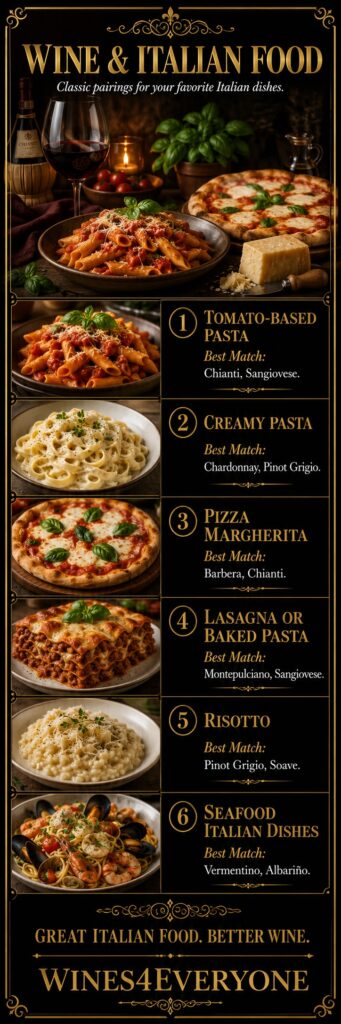
| Italian Food | Recommended Wines | Why it Works |
|---|---|---|
| Spaghetti & Meatballs | Chianti, Sangiovese, Barbera | Bright Italian reds match tomato sauce, herbs, and savory meatballs. |
| Lasagna | Chianti Classico, Montepulciano, Nero d’Avola | Medium-bodied reds balance cheese, pasta, meat, and rich tomato sauce. |
| Fettuccine Alfredo | Chardonnay, Pinot Grigio, Soave | Crisp or creamy whites balance buttery sauce without overpowering it. |
| Chicken Parmesan | Chianti, Barbera, Montepulciano | High-acid reds cut through fried chicken, cheese, and tomato sauce. |
| Eggplant Parmesan | Sangiovese, Chianti, Rosé | Fresh reds and dry rosé match tomato, cheese, and roasted eggplant. |
| Margherita Pizza | Chianti, Barbera, Pinot Grigio | Fresh wines complement tomato, basil, mozzarella, and simple crust. |
| Pepperoni Pizza | Zinfandel, Chianti, Montepulciano | Fruit-forward reds stand up to spice, salt, and melted cheese. |
| Risotto | Pinot Grigio, Chardonnay, Gavi | Elegant whites match creamy rice, butter, cheese, and delicate flavors. |
| Seafood Pasta | Vermentino, Pinot Grigio, Sauvignon Blanc | Crisp whites match shellfish, lemon, garlic, and olive oil sauces. |
| Clams Linguine | Vermentino, Soave, Pinot Grigio | Mineral-driven whites complement briny clams and light garlic sauce. |
| Pesto Pasta | Sauvignon Blanc, Vermentino, Gavi | Herbal whites match basil, garlic, pine nuts, and olive oil. |
| Bolognese | Sangiovese, Barbera, Nebbiolo | Structured Italian reds match slow-cooked meat sauce and tomato richness. |
| Carbonara | Pinot Grigio, Soave, Chardonnay | Fresh whites balance egg, cheese, pancetta, and black pepper. |
| Osso Buco | Barolo, Barbaresco, Chianti Classico | Structured reds match braised veal, herbs, and deep savory flavors. |
| Italian Sausage | Chianti, Barbera, Montepulciano | Bright reds balance fennel, pork fat, spice, and tomato sauce. |
| Veal Marsala | Pinot Noir, Barbera, Chianti | Earthy reds match mushrooms, veal, and savory wine-based sauce. |
| Bruschetta | Pinot Grigio, Prosecco, Vermentino | Fresh, lively wines match tomato, basil, garlic, and toasted bread. |
| Antipasto | Prosecco, Chianti, Rosé | Versatile wines balance cured meats, olives, cheese, and marinated vegetables. |
| Caprese Salad | Pinot Grigio, Sauvignon Blanc, Prosecco | Crisp wines match mozzarella, tomato, basil, and olive oil. |
| Tiramisu | Vin Santo, Moscato d’Asti, Port | Sweet wines complement coffee, cocoa, mascarpone, and delicate cream. |
Mastering the Art of Italian Food and Wine Pairing
To choose the best wine with Italian food, start with the sauce and dominant flavor. Italian dishes are often simple but layered, so the wine should balance acidity, richness, salt, herbs, and texture.
Tomato-Based Italian Food
Tomato sauce is naturally acidic, so it pairs best with wines that also have bright acidity. Chianti, Sangiovese, Barbera, Montepulciano, and Nero d’Avola are excellent choices.
Cream-Based Italian Food
Cream sauces, Alfredo, carbonara, and creamy risotto need wines with body and freshness. Chardonnay, Pinot Grigio, White Burgundy, Verdicchio, and sparkling wine can balance richness.
Seafood Italian Dishes
Italian seafood dishes pair best with crisp white wines. Pinot Grigio, Vermentino, Albariño, Verdicchio, Soave, and sparkling wine work well with shrimp, clams, mussels, scallops, and white fish.
Meat-Based Italian Dishes
Bolognese, meatballs, sausage, osso buco, veal, lamb, and braised meats need wines with structure and savory depth. Chianti Classico, Barolo, Barbaresco, Brunello, Montepulciano, and Super Tuscan blends are strong matches because their tannins and body stand up to rich, slow-cooked meat.
The Best Wines With Italian Food
The Best Wine for Spaghetti and Meatballs
Chianti is one of the best wines for spaghetti and meatballs because its bright acidity matches tomato sauce while its cherry, herb, and earthy notes complement garlic, oregano, Parmesan, and savory meat.
Sangiovese, Barbera, Montepulciano, and Nero d’Avola are also excellent choices. The goal is to choose a red wine that feels fresh and food-friendly rather than too heavy or overly sweet.
Best Wines for Spaghetti and Meatballs
Chianti Sangiovese Barbera Montepulciano Nero d’Avola Chianti Classico
The Best Wine for Lasagna
Lasagna needs a wine with acidity, structure, and enough body to handle tomato sauce, cheese, meat, and baked richness. Chianti Classico is one of the best choices because it balances all four elements.
Montepulciano, Barbera, Zinfandel, and Sangiovese also work well. If the lasagna is especially meat-heavy, a fuller red like Brunello or a Super Tuscan can be a strong match.
Best Wines for Lasagna
Chianti Classico Sangiovese Montepulciano Barbera Brunello Super Tuscan
The Best Wine for Pizza
Pizza pairs best with wines that can balance tomato sauce, melted cheese, herbs, crust, and toppings. Chianti is one of the strongest choices for classic cheese or Margherita pizza because its acidity works with tomato sauce and mozzarella.
Pepperoni or sausage pizza can handle Zinfandel, Montepulciano, or Syrah. White pizza pairs better with Chardonnay, Pinot Grigio, sparkling wine, or Sauvignon Blanc.
Best Wines for Pizza
Chianti Sangiovese Barbera Zinfandel Pinot Grigio Sparkling Wine
The Best Wine for Chicken Parmesan
Chicken parmesan needs a wine that can handle tomato sauce, melted cheese, breading, and savory chicken. Chianti is one of the best pairings because its acidity matches the sauce while its red fruit complements the cheese and herbs.
Sangiovese, Barbera, Montepulciano, and dry rosé also work well. If you prefer white wine, choose Pinot Grigio or Sauvignon Blanc, but red wine is usually the stronger pairing.
Best Wines for Chicken Parmesan
Chianti Sangiovese Barbera Montepulciano Dry Rosé Pinot Grigio
The Best Wine for Fettuccine Alfredo
Fettuccine Alfredo is rich with butter, cream, and Parmesan, so it needs a wine with body and acidity. Chardonnay is one of the best choices because it has enough texture to match the sauce.
Pinot Grigio and sparkling wine can also work because they cut through the richness and refresh the palate. For a more Italian-leaning choice, Soave or Verdicchio can be excellent.
Best Wines for Fettuccine Alfredo
Chardonnay Pinot Grigio White Burgundy Soave Verdicchio Sparkling Wine
The Best Wine for Risotto
Risotto pairs best with wine based on its main ingredient. Mushroom risotto pairs beautifully with Pinot Noir, Barbera, or Chardonnay. Seafood risotto works better with Pinot Grigio, Vermentino, or Soave. Parmesan risotto needs a wine with acidity and texture.
For a flexible option, Chardonnay, Verdicchio, and sparkling wine work well with many creamy risotto dishes.
Best Wines for Risotto
Chardonnay Verdicchio Pinot Noir Barbera Soave Sparkling Wine
The Best Wine for Italian Seafood
Italian seafood dishes need wines that are crisp, fresh, and clean. Pinot Grigio is one of the easiest choices for shrimp, clams, mussels, calamari, and light seafood pasta.
Vermentino, Albariño, Verdicchio, Soave, and sparkling wine also work well. If the seafood is served in tomato sauce, dry rosé or a light red such as Pinot Noir can work.
Best Wines for Italian Seafood
Pinot Grigio Vermentino Albariño Verdicchio Soave Sparkling Wine
The Best Wine for Veal
Veal is delicate but savory, so the best wine depends heavily on the preparation. Veal parmesan pairs well with Chianti, Sangiovese, and Barbera because of the tomato sauce and cheese. Veal marsala works well with Pinot Noir, Barbera, or Chardonnay because of the mushroom and pan sauce.
For veal piccata, choose Sauvignon Blanc, Pinot Grigio, or sparkling wine to match lemon, capers, and butter.
Best Wines for Veal
Chianti Sangiovese Barbera Pinot Noir Chardonnay Pinot Grigio
The Best Wine for Antipasto and Charcuterie
Antipasto platters include cured meats, cheeses, olives, roasted peppers, artichokes, bread, and marinated vegetables. These salty and savory flavors need wines with acidity and flexibility.
Sparkling wine is one of the best choices because it handles salt, fat, cheese, and mixed textures. Chianti, Barbera, dry rosé, Lambrusco, and Pinot Grigio also work well.
Best Wines for Antipasto
Sparkling Wine Lambrusco Chianti Barbera Dry Rosé Pinot Grigio
The Best Wine for Tiramisu and Italian Desserts
Italian desserts need wines with enough sweetness to match the dessert. Tiramisu pairs well with Vin Santo, Moscato, Marsala, and sweet sparkling wines. Cannoli works well with Moscato, Vin Santo, or Passito.
Chocolate-based Italian desserts can pair with Port, Brachetto d’Acqui, or sweet red wines. Lemon desserts work better with Moscato, Prosecco, or late-harvest white wines.
Best Wines for Italian Desserts
Vin Santo Moscato Marsala Brachetto d’Acqui Passito Sweet Sparkling Wine

Breaking the Rules: When White Wine Works With Red Sauce
Red wine is the traditional choice for many Italian tomato-based dishes, but white wine can work when the dish is lighter, fresher, or seafood-focused. The key is acidity.
Pinot Grigio, Vermentino, Sauvignon Blanc, Soave, Verdicchio, and Albariño can pair with lighter tomato sauces, tomato basil pasta, seafood marinara, bruschetta, and fresh vegetable dishes.
White wine is less successful with heavy meat sauces, sausage, lasagna, or rich baked pasta unless the dish includes cream, seafood, or lighter vegetables.
Why These Wine Pairings Work
Choosing the best wine pairing with Italian food comes down to sauce, acidity, fat, salt, herbs, and regional flavor.
Chianti: The Classic Italian Food Wine
Chianti works beautifully with Italian food because its acidity matches tomato sauce and cuts through cheese, olive oil, and savory meat. It is especially strong with pasta, pizza, chicken parmesan, meatballs, lasagna, and red sauce dishes.
Pinot Grigio: The Fresh White Wine Choice
Pinot Grigio is a useful Italian food wine because it is light, crisp, and easy to pair with seafood, salads, antipasto, chicken, veal piccata, and lighter pasta dishes.
Barbera: The Flexible Red
Barbera is one of the most flexible red wines for Italian food because it brings bright acidity with softer tannins. It works well with tomato sauce, sausage, pizza, meatballs, roasted vegetables, and baked pasta.
Sparkling Wine: The Antipasto and Fried Food Partner
Sparkling wine works well with Italian food because bubbles and acidity cut through salt, oil, cheese, fried textures, and cured meats.
Best Italian Food-Friendly Wines
If you are choosing wine with Italian food, look for acidity, balance, food-friendly structure, and enough freshness to match the dish.
Chianti
Best for pasta with tomato sauce, pizza, chicken parmesan, lasagna, meatballs, veal parmesan, and baked ziti.
Pinot Grigio
Best for seafood, antipasto, chicken piccata, veal piccata, salads, light pasta, and fresh mozzarella.
Barbera
Best for pizza, red sauce pasta, sausage, meatballs, roasted vegetables, and baked pasta.
Sangiovese
Best for tomato sauce, lasagna, pizza, chicken parmesan, veal parmesan, and rustic Italian dishes.
Vermentino
Best for seafood pasta, shrimp, clams, mussels, pesto, vegetable dishes, and lighter Italian meals.
Sparkling Wine
Best for antipasto, fried calamari, fried mozzarella, pizza, cured meats, creamy dishes, and Italian appetizers.
Ready to Find Your Perfect Food Pairing?
Whether you’re serving Cabernet Sauvignon, Chardonnay, Pinot Noir, or Rosé, the right meal can make all the difference. Answer a few quick questions and receive personalized food recommendations tailored to the wine you’re enjoying.
Ready to Find Your Perfect Wine Match?
Answer a few simple questions about your taste, food preferences, and wine style. We’ll help point you toward wines you’re more likely to enjoy.