If you love big, full bodied red wine, the Zinfandel vs Cabernet debate is one worth understanding. Both are popular, both are bold, and both deliver rich fruit and real depth. But they are not the same, and knowing the difference helps you pick the right bottle every time.
In this guide we compare Zinfandel and Cabernet Sauvignon side by side. You will learn how each one tastes, how they differ in structure, and which dishes they love. By the end, the Zinfandel vs Cabernet question will feel easy to answer.
Let us start with the basics.
Zinfandel vs Cabernet at a Glance
Both wines are bold reds, but they come from different places on the flavor map.
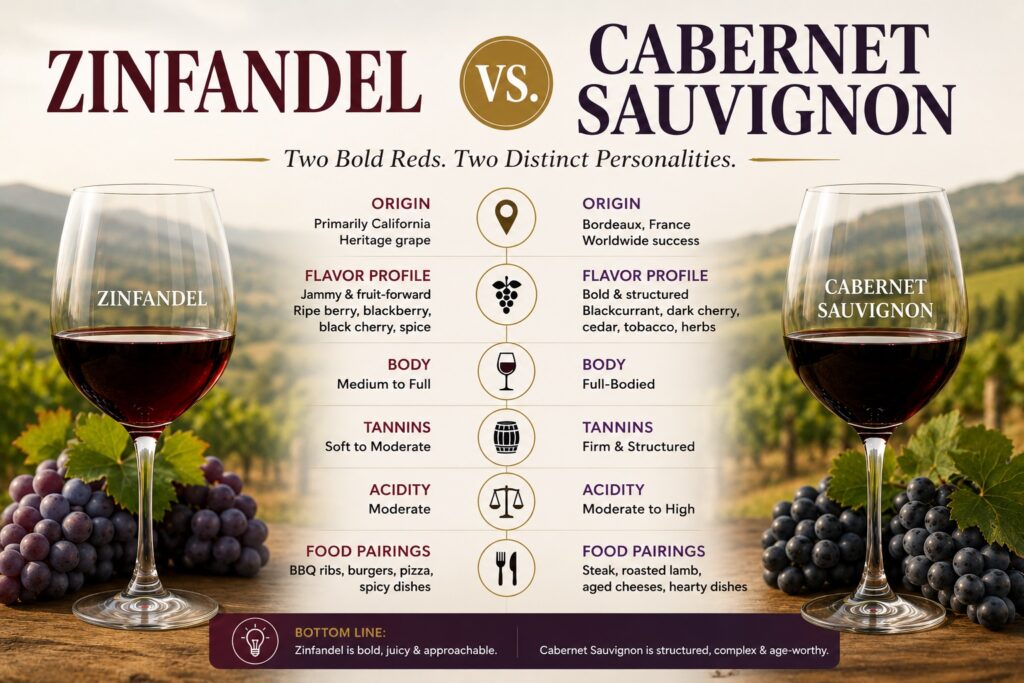
Cabernet Sauvignon is structured and firm. It is known for dark fruit, high tannin, and a serious, age worthy character. Zinfandel is plush and jammy. It leans into ripe, sweet tasting fruit and a softer, more exuberant style.
So in the Zinfandel vs Cabernet matchup, think of Cabernet as the polished, tailored red and Zinfandel as the fun, fruit forward one. Neither is better. They simply suit different moods and meals.
How Zinfandel Tastes
Zinfandel is famous for bold, jammy fruit. Expect flavors of blackberry, raspberry, black cherry, and dried fruit, often with a peppery spice note on the finish.
Because the fruit is so ripe, Zinfandel can taste almost sweet even when it is technically dry. It usually runs high in alcohol, which gives it a warm, rounded feel. For a full breakdown, our Zinfandel wine guide goes deeper into styles and regions.
One important note. Red Zinfandel is dry, while White Zinfandel is a separate sweet pink wine. They are easy to confuse, so check the label.
How Cabernet Sauvignon Tastes
Cabernet Sauvignon is more structured and restrained. It shows blackcurrant, black cherry, and plum, layered with notes of cedar, tobacco, and graphite from oak aging.
The defining feature is tannin. Cabernet has firm, grippy tannins that give it backbone and the ability to age for years. That structure is why it pairs so well with rich, fatty food.
In the Zinfandel vs Cabernet comparison, this is the clearest split. Cabernet is firmer and more savory, while Zinfandel is rounder and fruitier.
Zinfandel vs Cabernet: The Key Differences
Here is the quick summary.
- Fruit: Zinfandel is jammy and ripe. Cabernet is darker and more reserved.
- Tannin: Cabernet is high and grippy. Zinfandel is softer.
- Body: Both are full bodied, but Cabernet feels more structured.
- Alcohol: Zinfandel often runs higher.
- Aging: Cabernet ages longer and more gracefully.
- Mood: Cabernet is serious and elegant. Zinfandel is bold and fun.
Neither wine is sweet in the true sense, though Zinfandel’s ripe fruit can fool you. If sweetness is your main concern, our guide to dry versus sweet wine explains the difference between sweet and just fruity.
Which One Pairs Better With Food?
Both are excellent food wines, but they shine in different ways.
Cabernet Sauvignon is the classic match for red meat. Its tannin cuts through fat, which makes it ideal for steak, lamb, and aged cheese. See our guide to pairing red wine with steak for the full logic.
Zinfandel loves bolder, spicier, smokier food. Think barbecue, grilled sausages, pizza, and dishes with a little heat. Its ripe fruit and pepper notes stand up beautifully to smoke and spice.
So when choosing in the Zinfandel vs Cabernet debate, let the meal guide you. Steak night leans Cabernet. Barbecue leans Zinfandel.
Which Should You Choose?
Pick Cabernet Sauvignon when you want structure, elegance, and a wine that pairs with a steak dinner. Pick Zinfandel when you want bold, juicy fruit and a fun, easygoing red for casual food.
If you are newer to red wine, Zinfandel is often the friendlier entry point because its soft tannin and ripe fruit feel approachable. As your palate grows, Cabernet’s structure becomes more rewarding.
Either way, both belong in your rotation. Explore our full red wine guide to see how they fit alongside other bold reds.
Frequently Asked Questions
Is Zinfandel sweeter than Cabernet?
Red Zinfandel and Cabernet are both dry, but Zinfandel tastes sweeter because of its ripe, jammy fruit. In the Zinfandel vs Cabernet comparison, Zinfandel feels fruitier and rounder, while Cabernet is darker and more savory.
Which is stronger, Zinfandel or Cabernet?
Zinfandel often has higher alcohol, which can make it feel stronger and warmer. Cabernet feels more powerful in structure thanks to its firm tannins. Both are full bodied, so strength depends on what you mean by strong.
What is the main difference between Zinfandel and Cabernet?
The biggest difference is style. Zinfandel is jammy, ripe, and soft, while Cabernet is structured, tannic, and age worthy. That contrast is the heart of the Zinfandel vs Cabernet comparison.
Can you substitute Zinfandel for Cabernet?
Sometimes, but they behave differently. Zinfandel works for casual, bold dishes like barbecue, while Cabernet is better for steak and rich meats. Swapping one for the other changes the pairing, so match the wine to the food.
Which is better for beginners?
Zinfandel is usually the friendlier choice for beginners because its soft tannin and ripe fruit are easy to enjoy. Cabernet’s firm structure can feel intense at first but becomes very rewarding as your palate develops.
Find Your Perfect Bold Red
Now that the Zinfandel vs Cabernet question is clear, try them both. Explore our Zinfandel and Cabernet Sauvignon grape guides for top regions and bottles, then use our perfect match tool to pick the bold red that fits your taste and your table.