
If you have ever stood in front of a wine aisle and felt overwhelmed by the number of choices, you are not alone. Sweet white wine types are some of the most approachable wines for new drinkers, but the labels can be confusing. A wine called Moscato in one bottle can taste completely different from a Moscato in the next. Riesling can be bone dry or sticky sweet depending on the producer. This guide will break down the main sweet white wine types, what makes each one special, and how to find your favorite without guessing.
What Makes a White Wine Sweet?
White wine becomes sweet when some of the grape sugar is left in the bottle after fermentation. During fermentation, yeast eats sugar and turns it into alcohol. If the winemaker stops fermentation early or uses extra-ripe grapes, more residual sugar stays behind. That leftover sugar gives the wine its sweet flavor. Sweet white wine types fall on a spectrum from off-dry, which has just a hint of sweetness, all the way to dessert wines with intense honeyed notes. Knowing where a wine sits on that spectrum is the first step in finding one you love. Our dry versus sweet wine guide explains the full sweetness range in more detail.
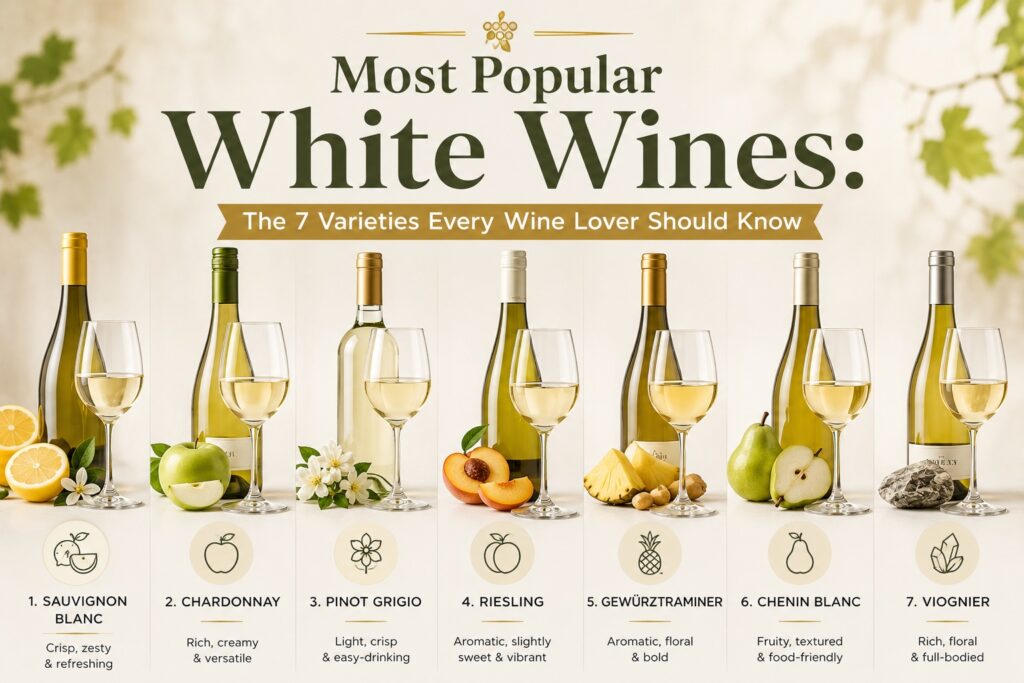
The Most Popular Sweet White Wine Types
A handful of grapes dominate the world of sweet white wines. Each one brings something different to the glass.
Moscato
Moscato is one of the most popular sweet white wine types for new drinkers. The wine is light, floral, and often slightly fizzy. Italian Moscato d’Asti is the most famous style, with low alcohol and bright peach and orange blossom notes. Australian Moscato tends to be a little riper and fruitier. To learn more about the grape, see our full Moscato grape profile.
Riesling
Riesling is the most versatile of all sweet white wine types because it ranges from crisp and dry to deeply sweet. The sweet versions, especially German Auslese and Spätlese styles, balance honey, apricot, and citrus with a bright streak of acidity. That acidity keeps Riesling from feeling cloying. Browse our Riesling profile for more on this grape.
Gewürztraminer
Gewürztraminer is the spicy sibling of the sweet white wine family. The grape produces wines with lychee, rose petal, and ginger notes. Off-dry and sweet styles from Alsace and Germany pair beautifully with rich foods like foie gras or spicy Asian dishes.
Sauternes
Sauternes is a famous sweet white wine from Bordeaux. The wine is made from Sémillon and Sauvignon Blanc grapes affected by noble rot, a fungus that concentrates the sugar. The result is a rich, honeyed wine with notes of apricot, marmalade, and almond. Sauternes is typically enjoyed in small pours after dinner.
Late-Harvest Chenin Blanc
Chenin Blanc from the Loire Valley in France can produce some of the most age-worthy sweet white wine types in the world. Late-harvest and noble rot versions show layers of honey, quince, and chamomile. These wines age beautifully for decades.
How to Read a Wine Label for Sweetness
Wine labels can be vague about sweetness, but a few clues help. Words like “late harvest,” “Spätlese,” “Auslese,” “Sauternes,” or “doux” almost always indicate a sweeter wine. The grape variety also gives strong hints. Moscato and Gewürztraminer lean sweet by default. Sauvignon Blanc almost always leans dry. Alcohol content is another clue. Many sweet white wine types have lower alcohol because fermentation was stopped early. If you see a bottle below 11 percent alcohol, it is often sweeter than a 13.5 percent bottle. For a deeper dive into wine label decoding, the white wine guide is a great starting point.
Best Food Pairings for Sweet White Wines
Sweet white wines are some of the most flexible wines for food pairing. The sugar in the wine balances spice and heat, which makes them great with Thai, Indian, and Sichuan dishes. Off-dry Riesling and Gewürztraminer pair beautifully with spicy curries and pork. Moscato shines with light fruit desserts, salty cheeses, and brunch foods like pancakes or french toast. Sauternes is a classic match for foie gras, blue cheese, and almond pastries. For a full list of pairings, browse our dessert wines page.
Sweet White Wine Serving Tips
Serving temperature makes a huge difference with sweet white wine types. Too cold and the flavors mute. Too warm and the wine feels syrupy. Most sweet whites do best at 45 to 50 degrees Fahrenheit. Pull the bottle from the fridge about 15 minutes before serving. Use a smaller wine glass that concentrates the aromatics. After opening, keep leftover wine in the fridge with a tight cork or stopper. Sweet wines hold up a bit longer than dry whites because the sugar acts as a mild preservative.
FAQs About Sweet White Wine Types
What is the sweetest type of white wine?
The sweetest white wines are typically dessert wines like Sauternes, Tokaji Aszú, and Eiswein. These wines contain very high residual sugar from late-harvest or noble-rot grapes and are usually served in small portions after dinner.
Is Moscato the sweetest white wine?
Moscato is one of the sweeter mainstream white wines, but it is not the sweetest. Dessert wines like Sauternes and ice wines are significantly sweeter. Moscato sits in a comfortable middle range that many beginners enjoy.
Are all Rieslings sweet?
No. Riesling ranges from completely dry to extremely sweet. German labels like Kabinett tend to be lighter and slightly off-dry, while Spätlese, Auslese, and Beerenauslese get progressively sweeter.
What food pairs best with sweet white wine?
Sweet white wine types pair beautifully with spicy foods, fruit-based desserts, blue cheese, and salty appetizers. The sugar balances heat and salt, which makes these wines extremely flexible at the table.
Are sweet white wines good for beginners?
Yes. Many wine drinkers start with sweet white wine types because the flavors are easier to recognize and the wines are less astringent than reds. Moscato and off-dry Riesling are especially beginner friendly.
Ready to Find Your Favorite Sweet White Wine?
Sweet white wine types open up a whole world of flavor for new and experienced drinkers alike. Whether you start with a light Moscato or work your way up to Sauternes, there is a perfect match out there. Explore our full sweet wine pillar page to keep learning.