If you have ever stared at a bottle and wondered, is Sangiovese sweet, you are not alone. This Italian red shows up on countless menus, yet its taste confuses new drinkers. The short answer is simple. Let us clear it up and then dig into why it tastes the way it does.
Sangiovese is the backbone of famous Italian wines like Chianti. Understanding its profile helps you order with confidence and pair it well at dinner.
The Quick Answer
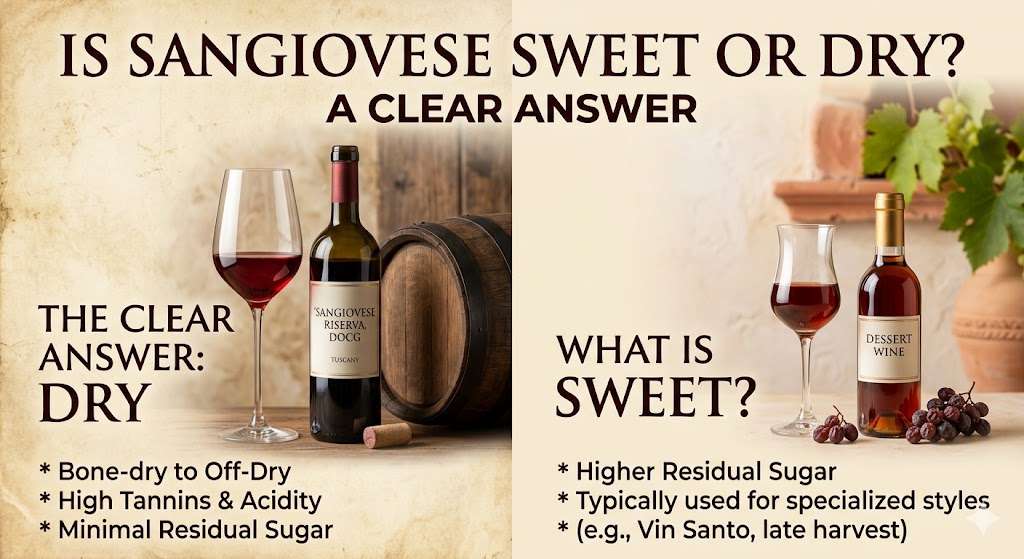
So, is Sangiovese sweet? No. Sangiovese is a dry red wine. It ferments until almost no residual sugar remains, which means it does not taste sweet in the way a dessert wine does. Instead, it delivers bright fruit, firm acidity, and savory notes.
People sometimes ask is Sangiovese sweet because the wine carries ripe cherry flavors. Ripe fruit can read as a touch of sweetness on the nose. On the palate, though, the finish is dry.
Why People Think Sangiovese Might Be Sweet
The confusion is understandable. The aroma of Sangiovese often shows red cherry, plum, and a hint of strawberry. Those fruity notes trick the brain into expecting sugar.
This is the difference between fruitiness and actual sweetness. To understand that gap, our guide on dry vs sweet wine explains how perception works. A wine can smell fruity and still finish bone dry.
So when you ask is Sangiovese sweet, remember that ripe aromas do not equal residual sugar.
What Sangiovese Actually Tastes Like
Sangiovese leans savory and food friendly. Expect tart cherry, dried herbs, a touch of tomato leaf, and earthy undertones. The acidity is high, which makes your mouth water and keeps the wine refreshing.
Tannins sit in the medium to high range. They give structure without overwhelming the fruit. The finish is dry, clean, and a little grippy. For a full breakdown, visit our Sangiovese grape profile.
How It Compares to Other Reds
Curious how it stacks up? Sangiovese is drier and more acidic than a jammy Zinfandel. It is lighter and more savory than a bold Cabernet. If you want to see those contrasts, our red wine guide covers the major styles.
People often type is Sangiovese sweet right before comparing it to fruitier reds. Once you taste it next to a ripe Zinfandel, the dryness becomes obvious.
Best Food Pairings for Sangiovese
This is where Sangiovese truly shines. Its acidity makes it a natural partner for tomato based dishes.
Try it with pasta in marinara, margherita pizza, roasted vegetables, or aged hard cheese. The wine cuts through richness and lifts the meal. Our wine with pasta pairing guide offers more ideas.
Because it is dry and savory, Sangiovese rarely suits sweet desserts. Save those for a true dessert wine instead.
Where Sangiovese Grows
Sangiovese is most famous in Tuscany, the home of Chianti. The Italian climate gives the grape its signature acidity and herbal edge. You can learn more about the grape’s most famous expression on our Chianti profile.
Final Take
To settle it once and for all: is Sangiovese sweet? No, it is dry, savory, and high in acidity, with ripe cherry fruit that can fool the nose. It is one of the most food friendly reds you can pour. New to wine? Our best wine for beginners guide will help you build your palate.
FAQs
Is Sangiovese sweet or dry?
Sangiovese is dry. It ferments until little to no residual sugar remains. Ripe cherry aromas can seem sweet, but the finish is dry.
Why does Sangiovese smell sweet but taste dry?
Ripe fruit aromas like cherry and plum read as sweetness on the nose. On the palate, the acidity and lack of sugar make the wine taste dry.
Is Sangiovese a good wine for beginners?
Yes. Its bright fruit and food friendly nature make it approachable. Pair it with pasta or pizza for an easy introduction.
What foods pair best with Sangiovese?
Tomato based dishes, pizza, roasted vegetables, and hard cheeses work beautifully. The acidity cuts through richness and refreshes the palate.
Is Sangiovese the same as Chianti?
Sangiovese is the main grape in Chianti. Chianti is a region in Tuscany, while Sangiovese is the grape grown there.