Choosing between two bold reds can feel tricky. The zinfandel vs cabernet question comes up often because both wines deliver big flavor and pair well with hearty meals. Yet they are quite different once you taste them side by side. This guide breaks down the differences in plain language so you can pick with confidence.
Both grapes produce dark, full reds. Still, the experience in the glass is not the same. One leans into jammy fruit and a touch of spice. The other brings structure, firm tannins, and a more savory edge. Let us walk through it.
The Quick Answer
Here is the zinfandel vs cabernet difference in one line. Zinfandel tends to taste fruitier, riper, and a little sweeter on the finish, while Cabernet Sauvignon tastes drier, firmer, and more structured. Zinfandel feels approachable and lush. Cabernet feels serious and age worthy.
If you want an easy crowd pleaser, reach for Zinfandel. If you want a wine that stands up to a thick steak and improves with time, reach for Cabernet.
Taste and Flavor Profile
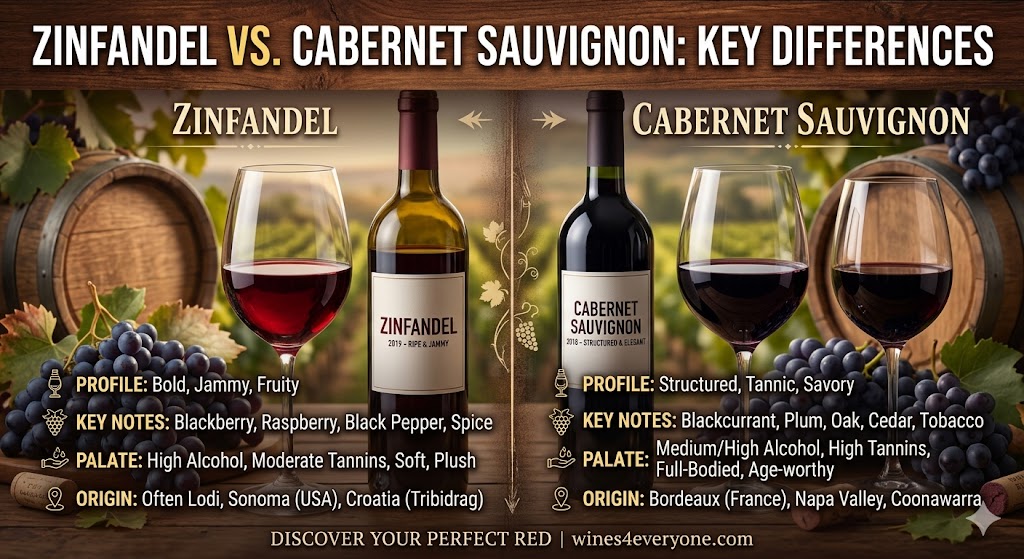
Flavor is where the zinfandel vs cabernet contrast shows up most clearly.
Zinfandel offers ripe blackberry, raspberry, and plum. You often notice black pepper, a hint of jam, and a warm finish from its higher alcohol. Because the fruit reads so ripe, many drinkers perceive Zinfandel as slightly sweet even when it is technically dry.
Cabernet Sauvignon brings blackcurrant, dark cherry, and notes of cedar, tobacco, and graphite. The tannins are firmer, which gives the wine that drying grip on your gums. Oak aging adds vanilla and baking spice. The result tastes more structured and less fruit forward.
Body, Tannin, and Sweetness
Both wines are full bodied. However, the texture differs.
Zinfandel can feel rounder and softer, with smoother tannins and a juicy mouthfeel. Its perceived sweetness comes from ripe fruit rather than residual sugar. To understand that distinction better, see our guide on dry vs sweet wine.
Cabernet carries more tannin, which creates a backbone that helps the wine age for years. That grip is why Cabernet pairs so well with rich, fatty foods. The fat softens the tannins and the wine cleanses your palate.
Food Pairing Differences
Food brings the zinfandel vs cabernet decision to life.
Zinfandel shines with barbecue, smoky ribs, burgers, and spiced dishes. Its fruit and pepper notes complement sauce heavy plates. For more bold red ideas, browse our red wine guide.
Cabernet is the classic steak wine. Its tannins cut through marbled beef, lamb, and aged cheese. If steak is on the menu, our wine with steak pairing guide walks through the best matches.
Which Should a Beginner Choose
New to red wine? Zinfandel is often the friendlier entry point because its ripe fruit feels welcoming. Cabernet rewards patience as your palate develops a taste for tannin and structure. Either way, our best wine for beginners resource helps you start smart.
You can also explore each grape on its own. Visit our Cabernet Sauvignon profile and our Zinfandel profile for deeper detail.
Region Matters Too
Where the grapes grow shapes the final wine. Zinfandel thrives in warm California zones like Paso Robles, where the heat builds ripe fruit. Cabernet reaches iconic heights in Napa Valley. Climate explains a lot of the zinfandel vs cabernet style gap.
Final Take
The zinfandel vs cabernet choice comes down to what you want from the glass. Pick Zinfandel for ripe, juicy, approachable reds. Pick Cabernet for structure, depth, and aging potential. Both belong in any curious drinker’s rotation.
Want to keep exploring reds? Our full grape varieties library covers every major style in beginner friendly terms.
FAQs
Is Zinfandel sweeter than Cabernet?
Zinfandel usually tastes sweeter because of its ripe fruit and higher alcohol. Most Zinfandel is still technically dry. Cabernet tastes drier and more savory.
Which is more full bodied, Zinfandel or Cabernet?
Both are full bodied. Cabernet feels firmer due to higher tannin, while Zinfandel feels rounder and juicier on the palate.
Is Cabernet or Zinfandel better with steak?
Cabernet is the classic steak pairing. Its tannins cut through fatty beef. Zinfandel works better with barbecue and smoky, spiced dishes.
Can a beginner tell the difference between Zinfandel and Cabernet?
Yes. Try them side by side. Zinfandel reads jammy and ripe. Cabernet reads structured and drying. The contrast is easy to notice.
Does red Zinfandel taste like Cabernet?
Not really. Red Zinfandel is fruitier and softer. Cabernet is more tannic with darker, savory notes. They share boldness but differ in style.