CABERNET & RIBEYE

TANNINS CUT THROUGH FAT
MALBEC & SIRLOIN
PINOT NOIR & FILET MIGNON
THE BOLD RED RULE
SYRAH & PEPPER-CRUSTED STEAK
SOPHISTICATED BORDEAUX BLENDS
ZINFANDEL & BBQ STEAK
PERFECT TEMPERATURE MATTERS
Mastering the Art of the Steak and Wine Duo
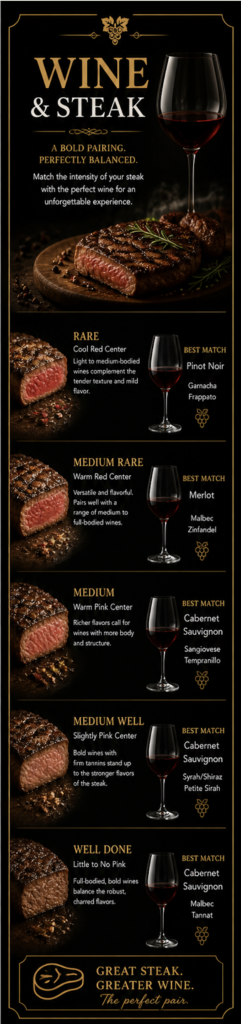
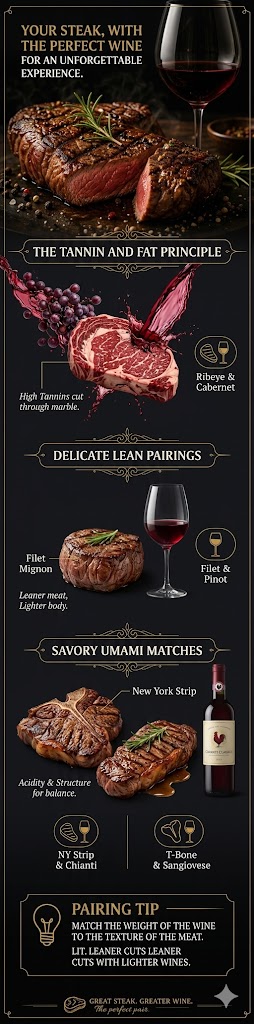
To help you choose the right bottle for your next meal, consider these general rules for matching wine with steak:
- Leaner Cuts (Sirloin, Filet Mignon): Look for light to medium-bodied reds with bright acidity or floral notes.
- Rich, Fatty Cuts (Ribeye, New York Strip): These pair best with high-tannin, full-bodied wines that can cut through the richness of the meat.
- Seasoning & Sauces: If your steak is heavily peppered or topped with a creamy sauce, choose a wine with spicy undertones or enough “weight” to hold its own against the extra flavors.
The Best Wine for Ribeye
Cabernet Sauvignon is the classic choice for ribeye — its dark fruit, structured tannins, and hint of cedar echo the char and richness of a well-cooked ribeye perfectly. Malbec is another outstanding option. Shiraz and Zinfandel both work well too, especially if you are grilling with bold seasonings or a spice rub.
The Best Wine for Filet Mignon
Cabernet Sauvignon is the classic choice for ribeye — its dark fruit, structured tannins, and hint of cedar echo the char and richness of a well-cooked ribeye perfectly. Malbec is another outstanding option. Shiraz and Zinfandel both work well too, especially if you are grilling with bold seasonings or a spice rub.
The Best Wine for New York Strip
While Cabernet Sauvignon and Malbec are the undisputed heavyweights for this cut, don’t overlook the sophisticated balance of a Chianti Classico. This Italian classic is an exceptional, often underrated partner for the New York Strip. Its vibrant acidity and structured tannins act as a perfect foil for the meat’s richness, while its signature savory cherry notes enhance the steak’s natural umami for a truly refined pairing.
Why These Three Stand Out
Choosing between these options depends on the “mood” of your meal:
Cabernet Sauvignon: The power move. It provides a robust structure that stands toe-to-toe with the boldest char.
Malbec: The smooth operator. Its plush, dark fruit profile offers a velvety contrast to the firm texture of the Strip.
Chianti Classico: The connoisseur’s choice. Its high acidity cuts through the “fat cap” with precision, keeping your palate refreshed between every bite.
The Ultimate Burger and Wine Match
When it comes to the classic burger, Zinfandel is a standout choice. Its signature “jammy” fruit profile, touch of spice, and approachable tannins are a natural match for the smoky, savory intensity of grilled beef. If you’re looking for other reliable options, Malbec and Merlot offer a smooth, fruit-forward richness that holds up beautifully against hearty toppings.
For those opting for a lighter turkey or chicken burger, you don’t have to stick to red. A medium-bodied Pinot Noir or even a crisp, chilled rosé can provide a refreshing contrast that won’t overwhelm the more delicate flavors of poultry.
Breaking the Rules: When White Wine Works with Steak
While red wine is the traditional partner for beef, there are specific culinary scenarios where white wine isn’t just an alternative—it’s an asset. A full-bodied, oaked Chardonnay possesses the weight and creamy texture to stand up to a butter-basted filet mignon or a rich steak au poivre finished with a heavy cream sauce. While a crisp white might disappear next to a flame-grilled ribeye, a bottle with significant “oak-backbone” provides a luxurious bridge to these more decadent, sauce-driven preparations.
Best "Steak-Friendly" White Wines
Best “Steak-Friendly” White Wines
If you are stepping away from the red cellar, look for bottles that offer structure and richness:
Oaked Chardonnay: Look for “California-style” bottles. The buttery, vanilla notes from the wood aging mirror the flavors of butter-basting and pan-sauces.
Vintage Champagne: The intense bubbles and high acidity provide a sharp contrast to the fat of a steak, acting as a palate cleanser similar to a dry red.
Semillon / Sauvignon Blanc Blends: Specifically those with some age or oak influence, which offer a “waxy” texture that complements leaner cuts.
The Ultimate Steak & Wine Pairing Guide
| Steak Cut / Style | Recommended Wines | Why it Works |
| Ribeye | Cabernet Sauvignon, Malbec, Shiraz | High tannins cut through the heavy marbling and rich fat. |
| Filet Mignon | Pinot Noir, Merlot, Aged Cabernet | Lean and delicate; requires a wine that won’t overpower the meat. |
| New York Strip | Cabernet Sauvignon, Chianti Classico, Malbec | Balanced grain and fat cap need structure and acidity. |
| Flank or Skirt Steak | Zinfandel, Malbec, Merlot | These “beefy” but thin cuts love jammy fruit and moderate tannins. |
| Sirloin / Picanha | Syrah, Cabernet Franc, Rioja | Leaner with high flavor; pairs well with peppery or herbaceous notes. |
| T-Bone / Porterhouse | Cabernet Sauvignon, Sangiovese | You have two textures (Filet & Strip), so a versatile, bold red is best. |
| Hanger Steak | Malbec, Carmenere, Nero d’Avola | A “butcher’s cut” with deep flavor that suits bold, earthy reds. |
| Prime Rib | Bordeaux Blend, Barolo, Petite Sirah | Slow-roasted richness demands a wine with significant “grip” and age. |
| Steak au Poivre | Syrah / Shiraz, Zinfandel | The peppercorn heat loves the spicy, dark fruit profiles of these grapes. |
| Steak with Cream Sauce | Oaked Chardonnay, Pinot Noir, Viognier | Requires “weight” or acidity to bridge the gap with the dairy. |
| Classic Burger | Zinfandel, Grenache, Malbec | Smoky, charred beef thrives with jammy fruit and spice. |
| Chimichurri Steak | Torrontés (white) or Malbec | The herbaceous sauce can handle a crisp white or a fruit-forward red. |
| Dry-Aged Steak | Vintage Port (Dry), Barbaresco, Brunello | The “funky” umami of aged beef needs a complex, savory wine. |
| Steak Tartare | Dry Riesling, Gamay (Beaujolais) | High acidity and low tannins won’t clash with the raw texture. |
| Blue Cheese Topped | Sauternes (sweet), Malbec, Shiraz | Sweetness or deep fruit provides a necessary foil to the salty cheese. |
| Flat Iron Steak | Merlot, Cabernet Franc | A middle-of-the-road cut that pairs beautifully with “plummy” reds. |
| Beef Wellington | Pinot Noir, Châteauneuf-du-Pape | The pastry and mushroom duxelles need earthy, elegant complexity. |
| Short Ribs (Braised) | Cabernet Sauvignon, Nebbiolo | Rich, melting collagen needs heavy tannins to refresh the palate. |
FAQs
Wine Pairings | Wine With Steak
Few culinary matches are as timeless as a perfectly seared steak and a well-chosen glass of wine. While the variety of cuts and vintages can make pairing feel like a puzzle, the process is actually quite intuitive once you know the basics. Whether you are serving a lean fillet or a marbled ribeye, this guide simplifies the selection process, ensuring your next pour is the ideal companion for your plate.
Frequently Asked Questions
What is the best red wine to pair with steak?
Cabernet Sauvignon is the most classic pairing for steak. Its firm tannins and dark fruit character stand up beautifully to the richness and fat of grilled beef. Malbec is a close second and arguably more approachable for everyday drinking.
Does the cut of steak matter when choosing wine?
Yes. Fattier cuts like ribeye need bolder, more tannic wines. Leaner cuts like filet mignon pair better with wines that have softer tannins. Matching the weight of the wine to the richness of the cut is the key principle.
Can I pair Pinot Noir with steak?
Pinot Noir works well with leaner cuts like filet mignon and flank steak. It is generally too light for heavily marbled cuts like ribeye, where its delicate character gets lost against the fat.
Should wine be opened before serving with steak?
Younger, full-bodied reds like Cabernet Sauvignon and Malbec benefit from 30 to 60 minutes in a decanter before serving with steak. The air exposure softens tannins and opens up aromas.
What wine goes with a well-done steak?
Well-done steak has less juice and fat on the palate, so a lighter-bodied red or even a full-bodied rosé works better than an overpowering tannic red. Merlot and Pinot Noir are safe choices for well-done preparations.
Ready to Apply Your Knowledge?
Now that you’ve mastered the basics, it’s time to explore the specific grapes that bring these concepts to life.