What Wine Goes with Steak? The Complete Pairing Guide
Steak and wine is one of the most iconic food and drink combinations in the world. But knowing exactly which bottle to open with which cut can feel complicated. The good news is it does not need to be. This guide breaks down the best wine pairings for every type of steak so you can pour with confidence every time.
CABERNET & RIBEYE
TANNINS CUT THROUGH FAT
MALBEC & SIRLOIN
PINOT NOIR & FILET MIGNON
THE BOLD RED RULE
SYRAH & PEPPER-CRUSTED STEAK
SOPHISTICATED BORDEAUX BLENDS
ZINFANDEL & BBQ STEAK
PERFECT TEMPERATURE MATTERS
Why Red Wine Works So Well with Steak
The classic pairing of red wine and steak is not just tradition. There is real chemistry behind it. Red wine contains tannins — naturally occurring compounds found in grape skins, seeds, and oak barrels. Tannins bind to proteins and fats in the mouth. When you take a sip of a tannic red alongside a fatty, protein-rich steak, the tannins are absorbed by the fat in the meat. The result is a softer, rounder wine and a richer tasting steak.
The Best Wine for Ribeye
Cabernet Sauvignon is the classic choice for ribeye — its dark fruit, structured tannins, and hint of cedar echo the char and richness of a well-cooked ribeye perfectly. Malbec is another outstanding option. Shiraz and Zinfandel both work well too, especially if you are grilling with bold seasonings or a spice rub.
The Best Wine for Filet Mignon
Cabernet Sauvignon is the classic choice for ribeye — its dark fruit, structured tannins, and hint of cedar echo the char and richness of a well-cooked ribeye perfectly. Malbec is another outstanding option. Shiraz and Zinfandel both work well too, especially if you are grilling with bold seasonings or a spice rub.
The Best Wine for New York Strip
Cabernet Sauvignon works well here, as does Malbec. Chianti Classico is an underrated pairing for strip steak. Its high acidity, firm tannins, and savory cherry character cut through the fat and complement the natural umami of the meat beautifully.
The Best Wine for a Burger
Zinfandel is outstanding here — its jammy fruit, spice, and moderate tannins love the smoky, savory richness of a burger. Malbec and Merlot are solid choices too. If you are serving a lighter turkey or chicken burger, a medium-bodied Pinot Noir or even a chilled rosé works surprisingly well.
Can You Pair White Wine with Steak?
Yes, in specific situations. A full-bodied, oaked Chardonnay can hold its own against a butter-basted filet or a steak au poivre with cream sauce. That said, white wine is generally not the first choice for a classic grilled steak.

Quick Pairing Reference
Ribeye: Cabernet Sauvignon, Malbec, Shiraz
Filet Mignon: Pinot Noir, Merlot, elegant Cabernet Sauvignon
New York Strip: Cabernet Sauvignon, Malbec, Chianti Classico
Flank or Skirt Steak: Malbec, Zinfandel, Merlot
Burger: Zinfandel, Malbec, Merlot
Steak with Cream Sauce: Oaked Chardonnay, Pinot Noir
FAQs
Frequently Asked Questions
What is the best red wine to pair with steak?
Cabernet Sauvignon is the most classic pairing for steak. Its firm tannins and dark fruit character stand up beautifully to the richness and fat of grilled beef. Malbec is a close second and arguably more approachable for everyday drinking.
Does the cut of steak matter when choosing wine?
Yes. Fattier cuts like ribeye need bolder, more tannic wines. Leaner cuts like filet mignon pair better with wines that have softer tannins. Matching the weight of the wine to the richness of the cut is the key principle.
Can I pair Pinot Noir with steak?
Pinot Noir works well with leaner cuts like filet mignon and flank steak. It is generally too light for heavily marbled cuts like ribeye, where its delicate character gets lost against the fat.
Should wine be opened before serving with steak?
Younger, full-bodied reds like Cabernet Sauvignon and Malbec benefit from 30 to 60 minutes in a decanter before serving with steak. The air exposure softens tannins and opens up aromas.
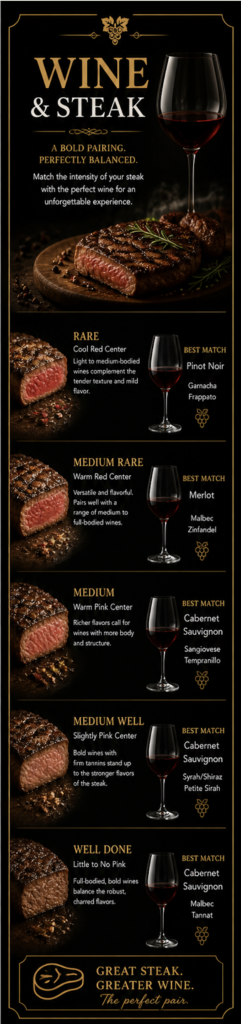
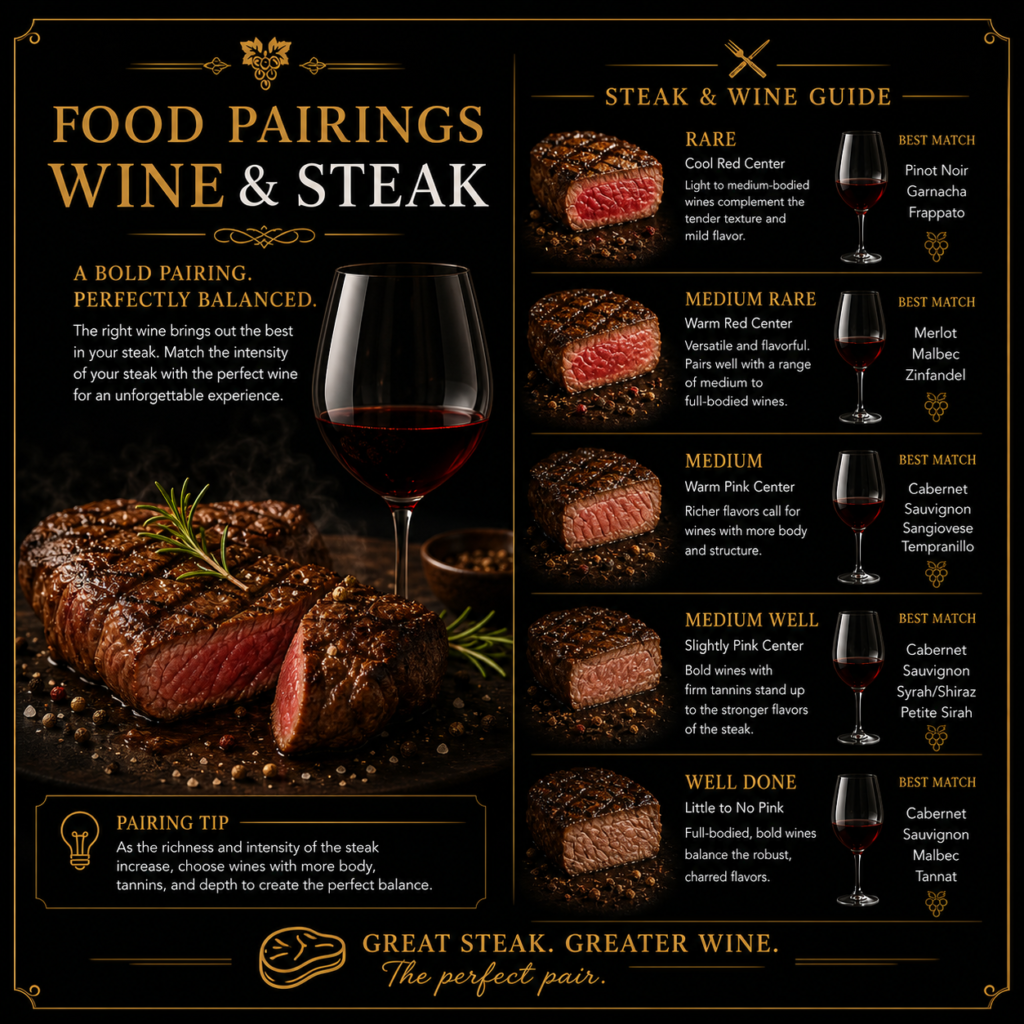
What wine goes with a well-done steak?
Well-done steak has less juice and fat on the palate, so a lighter-bodied red or even a full-bodied rosé works better than an overpowering tannic red. Merlot and Pinot Noir are safe choices for well-done preparations.
Ready to Apply Your Knowledge?
Now that you’ve mastered the basics, it’s time to explore the specific grapes that bring these concepts to life.