Texas Hill Country Wine Region
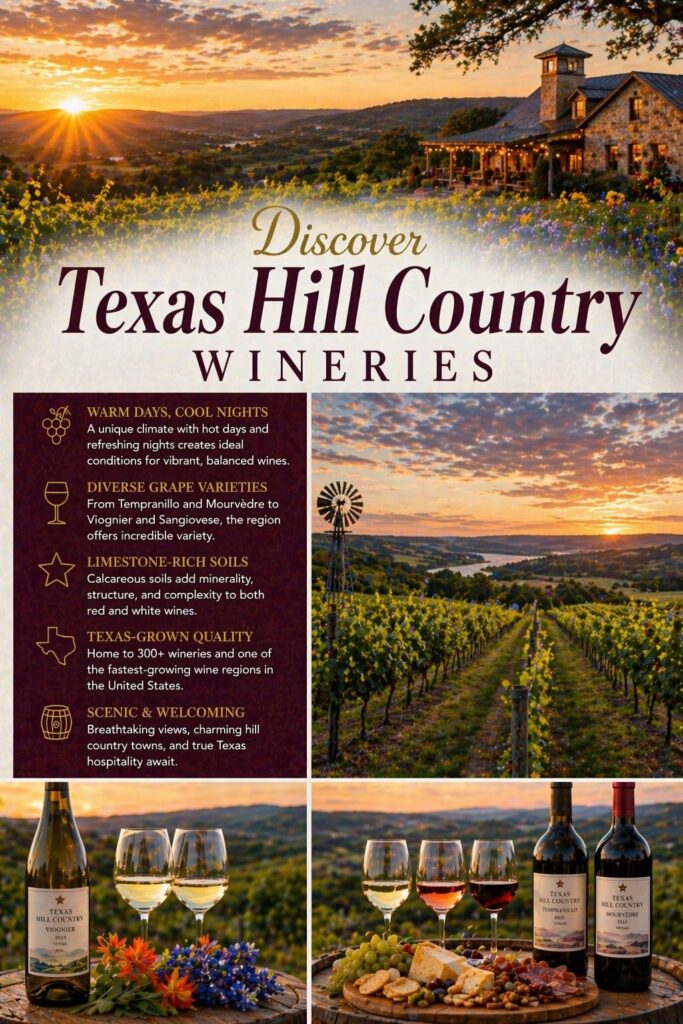
Texas Hill Country is one of the fastest-growing wine regions in the United States, known for its warm climate, rolling hills, and bold, expressive wines. Located between Austin and San Antonio, this region blends Old World grape varieties with Texas terroir to produce wines that are rich, fruit-forward, and increasingly refined.
Your Guide to Texas Hill Country Wine
Texas Hill Country AVA is the second-largest wine region in the U.S. by geographic size and one of the most dynamic. The region’s hot days and cooler nights allow grapes to develop strong flavor while maintaining balance.
Unlike many U.S. regions, Texas Hill Country leans heavily into Mediterranean grape varieties such as Tempranillo, Sangiovese, Mourvèdre, and Viognier. These grapes thrive in the region’s climate and define its unique identity.
With over 100 wineries and a rapidly expanding reputation, Texas Hill Country is becoming a serious destination for wine tourism and production.

- Warm Climate Wines
- Italian & Spanish Varieties
- Rapidly Growing Wine Scene
- 100+ Wineries
- Bold, Fruit-Driven Styles
The Signature Grapes of the Region
Wines Texas Hill Country Is Known For
Texas Hill Country produces a wide range of wines, but these are the standout varieties that define the region.
- Tempranillo: The flagship red. Bold, structured, and well-suited to the Texas climate.
- Sangiovese: Bright acidity with cherry and earthy notes. A consistent performer in the region.
- Mourvèdre: Deep, rich, and slightly rustic with dark fruit and spice.
- Viognier: The leading white. Aromatic, floral, and full-bodied.
- Grenache & GSM Blends: Fruit-forward blends with balance and versatility.
Why Texas Hill Country Stands Out
The Terroir
The Texas Hill Country AVA was established in 1991 and spans a massive area across Central Texas. The region features limestone-rich soils, rolling hills, and elevations that help create airflow and moderate heat.
The climate is warm and dry, which reduces disease pressure but requires careful vineyard management. The key advantage is long growing seasons, allowing grapes to fully ripen and develop bold flavors.
This environment is particularly well-suited for drought-tolerant grape varieties, which is why Spanish and Italian grapes perform so well here.
Tempranillo Leads the Region
The Signature Grape
Tempranillo has become the defining grape of Texas Hill Country. It thrives in warm climates and produces wines with bold fruit, structure, and a slightly earthy finish.
In Texas, Tempranillo often shows blackberry, plum, leather, and spice, making it both approachable and complex. It represents the direction of the region better than any other grape.
The Texas Hill Country Experience
What to Expect from Texas Hill Country Wines
Texas Hill Country wines are generally bold, fruit-driven, and approachable. The warm climate leads to ripe flavors, while elevation and nighttime cooling help maintain balance.
Expect wines that are:
- Full-bodied and expressive
- Fruit-forward with spice and depth
- Built for warm-weather enjoyment
- Increasingly refined year over year
The tasting experience is relaxed and social. Many wineries offer scenic hilltop views, live music, and a strong hospitality-driven atmosphere that reflects Texas culture.
Must-Visit Texas Hill Country Wineries
Texas Hill Country is home to a wide range of wineries, from boutique producers to large, destination-style estates. These wineries represent some of the most popular and respected stops in the region.
- Becker Vineyards
- Garrison Brothers Distillery (Wine + Experience)
- William Chris Vineyards
- Signor Vineyards
- Fall Creek Vineyards
- Torre di Pietra Vineyards
- Pedernales Cellars
- Sister Creek Vineyards
- Messina Hof Hill Country Winery
- Lost Draw Cellars
- Bingham Family Vineyards
- Ab Astris Winery
- The Cabernet Grill & Winery
- Invention Vineyards
- Driftwood Estate Winery
- Duchman Family Winery
- Solaro Estate Winery
- Hilmy Cellars
- Kerrville Hills Winery
- Four Point Cellars
Ready to Apply Your Knowledge?
Now that you’ve mastered the basics, it’s time to explore the specific grapes that bring these concepts to life.