If you have ever spotted a bottle of Zinfandel on a wine list and wondered what to expect, you are in good company. Zinfandel wine is one of the most distinctive reds in America, yet it confuses a lot of new drinkers. There is the dark, fruity red version. There is the pink, sweeter White Zinfandel. There are old vine bottles and modern ones, and the prices swing widely.
This guide breaks it all down in plain language. You will learn what Zinfandel wine actually tastes like, how it compares to other popular reds, the best foods to serve with it, and how to pick a bottle you will enjoy on the first try.
What is Zinfandel Wine?
Zinfandel wine is a red wine made from the Zinfandel grape. The grape itself has roots in Croatia, but California claims it as its signature red. Most of the world’s Zinfandel today comes from California, especially Sonoma, Lodi, Paso Robles, and Napa.
The style is bold, fruit-forward, and high in alcohol. Most bottles run between 14 and 16 percent alcohol, which is on the higher end for red wine. The fruit flavor leans toward dark berries, jam, and sometimes black pepper. Read more on our Zinfandel grape page.
Zinfandel Wine Taste and Characteristics
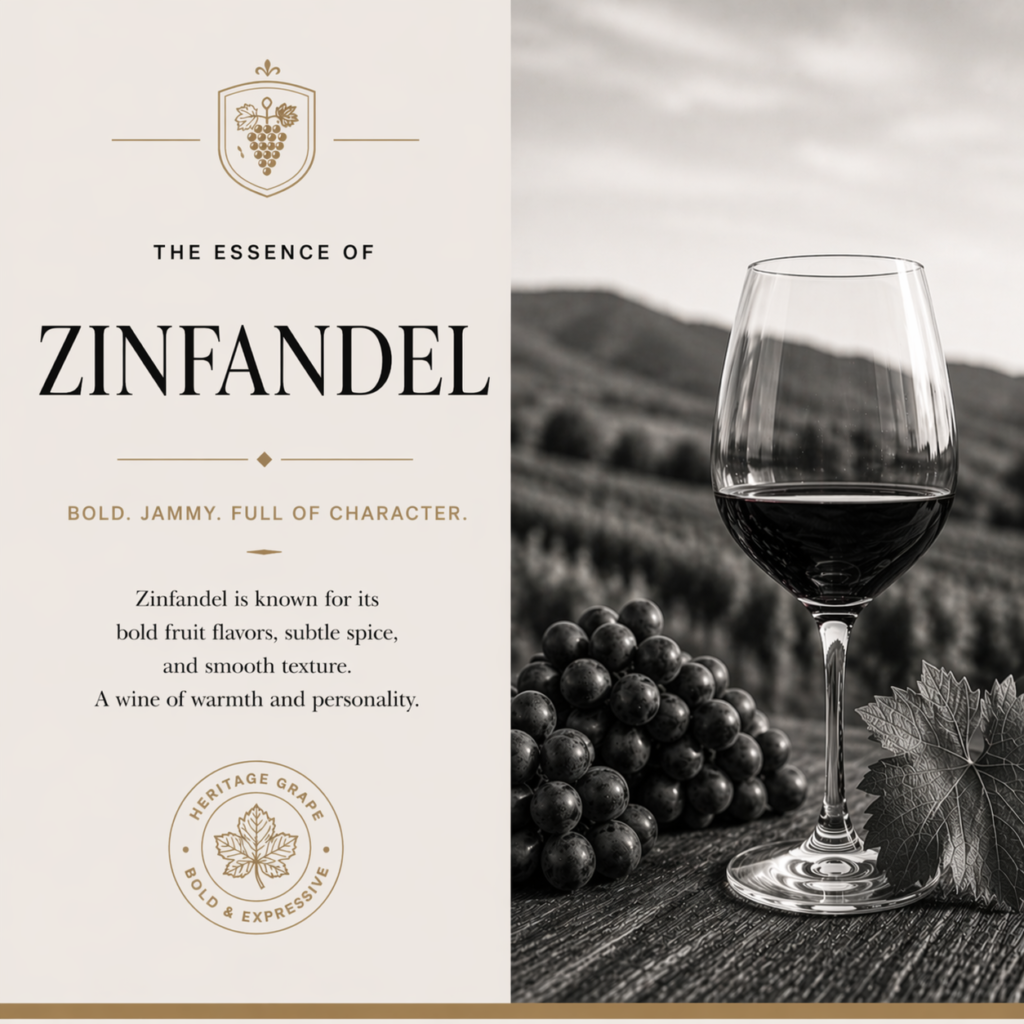
The first thing you notice in a glass of Zinfandel is the fruit. Think blackberry, raspberry, plum, and dark cherry. The fruit can taste so ripe that some people describe it as jammy or even baked.
Behind the fruit you will pick up spice notes. Black pepper, cinnamon, and sometimes a hint of licorice are common. Older bottles or oak-aged versions add chocolate, tobacco, and vanilla on top of that fruit base.
Zinfandel wine has medium tannins, which means it has structure but it is not as grippy as Cabernet Sauvignon. The acidity is moderate. The high alcohol gives the wine a warm, almost sweet impression even when the bottle is technically dry.
If you enjoy Malbec or Syrah, you will probably enjoy Zinfandel. It sits in the same fruit-forward, full-bodied family.
Old Vine Zinfandel vs Regular Zinfandel
You may see the words “Old Vine” on a Zinfandel label. This is one of the few wine terms that actually means something specific in California.
Old vine vineyards have grapes that are at least 50 years old, and many are over 100 years old. These older vines produce fewer grapes per plant, but the grapes are concentrated and deeply flavored. The result is a richer, more complex wine.
Regular Zinfandel comes from younger vines. The wine is still good, often great, but tends to be more straightforward and fruity. Old vine bottles usually cost more, but the upgrade is real if you like a more layered glass.
Best Zinfandel Wine Food Pairings
Zinfandel is a food wine, full stop. The bold fruit and spice notes match a wide range of dishes that other reds struggle with.
The classic pairing is barbecue. The wine’s dark fruit complements smoky meats, and the spice notes mirror chili rubs and barbecue sauce. Pulled pork, brisket, smoked ribs, and grilled sausages all sing with Zinfandel.
Burgers work beautifully. So do meatballs, pepperoni pizza, and any tomato-based pasta with sausage. Mexican food is an underrated match because the wine handles heat and spice well. Try a Zinfandel with carne asada or a chipotle-based dish.
For cheese, look for sharp aged cheddar, Manchego, or even blue cheese. Avoid super delicate cheeses, since the wine will overpower them.
Vegetarians, you are not left out. Grilled portobello mushrooms, lentil dishes with smoky paprika, and roasted root vegetables with rosemary all pair well with a fruit-forward Zinfandel wine.
How to Serve Zinfandel Wine
A few simple rules make any glass of Zinfandel taste better.
Serve it slightly below room temperature, around sixty to sixty-five degrees Fahrenheit. Pull the bottle out of the fridge about thirty minutes before pouring. Room temperature is usually too warm, and the high alcohol becomes overwhelming.
Use a larger bowl-shaped red wine glass if you have one. The shape helps the wine breathe and lets the fruit aromas open up. Let the wine sit in the glass for ten to fifteen minutes after pouring. The flavor improves noticeably with a little air.
Older or higher-end Zinfandel benefits from a quick decant. Pour the wine into a decanter or a clean carafe for thirty minutes before serving.
White Zinfandel vs Red Zinfandel
Here is where many beginners get confused. White Zinfandel is not a separate grape. It is the same Zinfandel grape, but the juice spends very little time with the skins during fermentation. That short contact creates a light pink color instead of a deep red.
White Zinfandel is sweeter, lower in alcohol, and much lighter in flavor. It was wildly popular in the 1980s and remains a friendly entry-level wine for people who prefer sweeter styles. Real Zinfandel wine, the bold red version, is a completely different experience.
If you have only had White Zinfandel, give the red version a try before deciding whether you like the grape.
Is Zinfandel Right for You?
If you enjoy fruit-forward reds and food-friendly bottles, Zinfandel is worth a try. If you prefer lighter, more delicate reds like Pinot Noir, you may find the alcohol and intensity too much.
The fastest way to find out which style suits you is our Perfect Match wine quiz. Twenty quick questions about your taste preferences give you a personal wine recommendation in under three minutes.
Frequently Asked Questions
Is Zinfandel wine dry or sweet?
Red Zinfandel is almost always dry, though the ripe fruit can give an impression of sweetness. White Zinfandel is sweet to off-dry. If a bottle is labeled simply “Zinfandel,” it is the dry red version.
What does Zinfandel wine taste like?
Zinfandel tastes like ripe dark berries with notes of black pepper, spice, and sometimes chocolate or tobacco. The wine is bold, full-bodied, and higher in alcohol than most reds.
Is Zinfandel similar to Cabernet Sauvignon?
Both are big, full-bodied reds, but they are different in style. Cabernet has more tannin and earth notes. Zinfandel is more fruit-forward, jammier, and slightly spicier. Zinfandel is also usually a touch warmer in alcohol.
What food pairs best with Zinfandel wine?
Barbecue is the classic match. Smoked meats, burgers, pizza, tomato-based pasta dishes, and bold Mexican food all pair beautifully with Zinfandel. For cheese, aged cheddar and Manchego are reliable picks.
How long does an opened bottle of Zinfandel last?
About three to five days if you reseal it and store it in the fridge. Higher alcohol wines like Zinfandel hold up slightly longer than lighter reds. The wine will still be safe to drink after that, but flavor will fade.
Take the Perfect Match Quiz
Curious whether Zinfandel is the right wine for your palate, or whether another style suits you better? Take our Perfect Match wine quiz. Three minutes, twenty questions, one personal wine recommendation. No snobbery, no jargon, just a clear answer.Share