If you have ever stood frozen in front of a wall of wine bottles, you are not alone. Picking wine for beginners can feel overwhelming. The labels look complicated. The grape names sound foreign. The price tags swing wildly with no clear reason. The good news is that none of that has to be a barrier. Wine is meant to be enjoyed, not decoded.
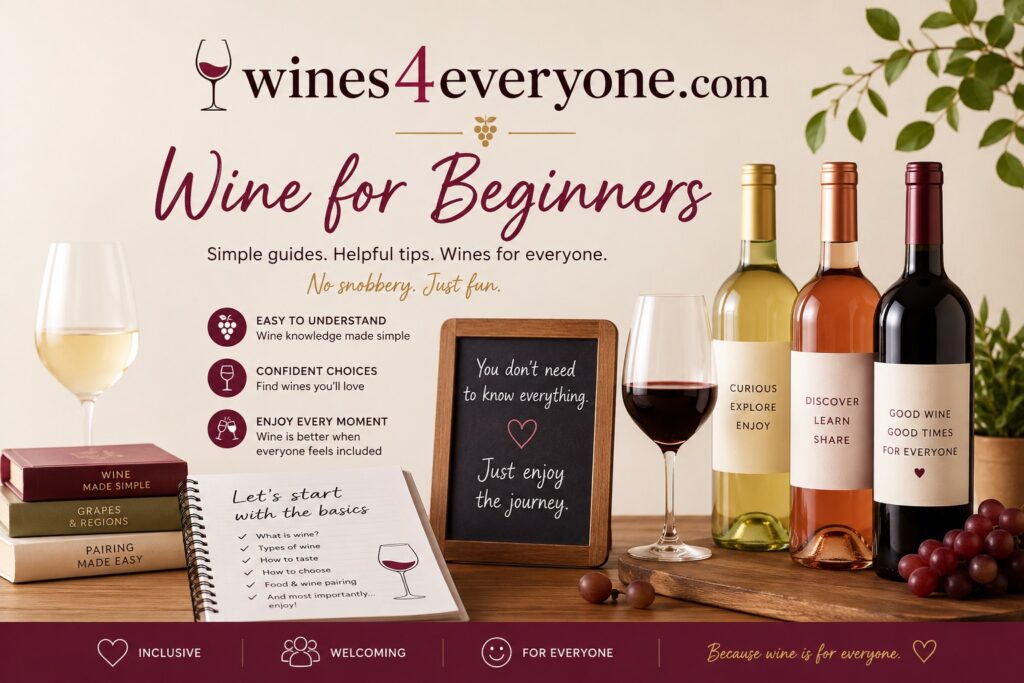
This guide is built for people who are brand new to wine and want a simple starting point. We will walk through the main wine styles, the easiest way to figure out what you actually like, and a short list of bottles that make great first sips. Take what is useful, skip what is not, and remember that taste is personal.
Why Wine for Beginners Feels So Confusing
The wine world uses a lot of insider language. Tannins. Terroir. Vintages. Body. Most of those terms describe simple things, but the vocabulary makes wine feel like a club with a secret handshake.
Add in thousands of grape varieties, dozens of regions, and shelves stocked from every continent, and the choice can feel paralyzing. The truth is that you only need a handful of basics to start enjoying wine. Once you understand the main styles and how to talk about what you like, the rest gets easier fast.
Start With What You Already Like
The best wine for beginners is not the most famous bottle. It is the one that matches the flavors you already enjoy in other foods and drinks.
Do you love sweet iced tea or fruit punch? You will probably enjoy sweeter wine styles. Do you prefer black coffee, dark chocolate, or hoppy beer? You probably lean toward bold, dry reds. Do you love crisp lemonade or sparkling water with lime? You may love a dry, crisp white.
Taste mapping like this is the fastest shortcut into the wine world. Our Perfect Match wine quiz is built around this exact idea. Twenty quick questions about food, mood, and flavor preferences give you a personal recommendation. It is the easiest first step we know of.
Red vs White vs Rosé: A Quick Beginner Breakdown
Most wine for beginners falls into one of three big buckets. Knowing the difference helps you narrow your options at the store or restaurant.
Red Wine Basics
Red wines are made from dark grapes with the skins left on during fermentation. Those skins create the color, the tannins, and the bigger structure that reds are known for. Reds range from light and fruity to deep and bold. Popular beginner-friendly reds include Pinot Noir, Merlot, and Malbec. Learn more on our red wine page.
White Wine Basics
White wines are made from green or yellow grapes, usually without the skins. That gives them a lighter color, lower tannins, and a brighter feel on the palate. Some are crisp and dry, others are smooth and fruity. Popular beginner picks include Pinot Grigio, Sauvignon Blanc, and off-dry Riesling. See our full white wine guide.
Rosé and Sparkling
Rosé sits between red and white. It is made from red grapes with brief skin contact, giving it that pink color and a light, refreshing style. Sparkling wines like Prosecco and Champagne are simply wines with carbonation, made through a second fermentation. Both styles are wildly approachable for new drinkers.
Dry vs Sweet: The Single Most Useful Question
If you only learn one wine concept, make it this one. Dry wine has little to no residual sugar. Sweet wine has noticeable sweetness. Many people assume they prefer dry because it sounds sophisticated, but personal taste is the only thing that matters here.
A dry wine might taste tart or even bitter at first if you are used to sweet drinks. A sweet wine can feel like a treat all on its own. Knowing which side of the line you prefer narrows your choices instantly. Read our breakdown of dry vs sweet wine to find your zone.
5 Great Wines for Beginners to Try First
Here are five styles that consistently work well for new wine drinkers. Order them at a restaurant or grab one for your next dinner at home.
- Pinot Grigio. Light, crisp, easy on the palate. A safe first white.
- Moscato. Sweet, fruity, low alcohol. A favorite for sweet tooths.
- Pinot Noir. Light-bodied, low tannin, food-friendly. The gentlest red.
- Malbec. Smooth, fruit-forward, big but not harsh. Great with a casual dinner.
- Prosecco. Crisp Italian sparkling. Pairs well with almost anything.
Any of these wine for beginners options will run you between fifteen and twenty-five dollars at most stores. Spending more does not guarantee you will like it more, especially when you are new.
How to Order Wine Without Feeling Awkward
Restaurant wine lists can feel intimidating. The trick is to ask one or two clear questions. Tell the server you usually like sweet drinks or that you prefer bold reds. Ask for something in your price range. A good server will guide you with no judgment.
You can also ask to taste a wine before committing to a glass. Most restaurants will pour a small sample. There is no shame in saying it is not for you.
Take the Perfect Match Quiz
Reading guides helps, but personalized recommendations help more. Our free Perfect Match wine quiz asks twenty fast questions about your taste preferences, food habits, and lifestyle. In about three minutes you will get a wine style recommendation built for your palate.
It is the simplest way to skip the confusion and start drinking wines you actually enjoy.
Frequently Asked Questions
What is the easiest wine for beginners to drink?
Most new drinkers find Pinot Grigio, Moscato, and Pinot Noir the easiest. They are smooth, low in bitterness, and forgiving with food. If you prefer sweeter flavors, start with Moscato. If you want a dry option, Pinot Grigio is your best bet.
Should I start with red or white wine?
Either works. White wines tend to be lighter and more forgiving for new palates. Red wines have more structure and pair well with heartier food. Try one of each at a casual setting and see which you prefer.
How much should I spend on my first bottle of wine?
Fifteen to twenty-five dollars buys plenty of quality at the beginner level. Spending more does not always mean better, especially before you have figured out what you like. Save the splurge for after you have explored.
Is sweeter wine for beginners better than dry wine?
It depends on you. Sweeter wines tend to feel friendlier to people who already enjoy sweet beverages. Dry wines can taste sharp at first if you are not used to them. Neither is right or wrong. Personal preference is the only rule.
How do I describe wine I like to a server or store clerk?
Use simple language. Say things like “I like sweet wine,” “I want something fruity,” or “I usually drink red but want to try a white.” You do not need fancy terms. Clear preferences get better recommendations.
Find Your Wine Match Today
Ready to skip the guesswork? Take our Perfect Match wine quiz and get a wine recommendation built for your taste in under three minutes. No snobbery, no jargon, no pressure. Just a clear answer to the question every beginner asks: which wine should I try first?