Decanting wine sounds intimidating. It conjures images of formal dinner parties and expensive bottles. In reality, decanting is one of the most practical things you can do to make a wine taste better. It takes less than five minutes and the difference it makes can be remarkable.
This guide explains how to decant wine correctly, which wines benefit most, and when you can skip it entirely.
What Is Decanting?
Decanting means pouring wine from its bottle into a separate vessel — called a decanter — before serving it. There are two reasons to do this. The first is to separate the wine from any sediment that has settled in the bottle. The second — and more common reason — is to expose the wine to oxygen, which opens up its aromas and softens its texture.
The process is simple. The results are often impressive.
Why Oxygen Improves Wine
When wine sits sealed in a bottle, it is in a closed, oxygen-deprived environment. The aromas are locked in and the flavors can feel tight and underdeveloped when you first open it. This is especially true for young, tannic red wines.
When you pour wine into a decanter, it comes into contact with air. That exposure triggers a process called oxidation. Harsh tannins soften. Volatile compounds that cause off-putting aromas on first open — sometimes called reduced aromas, like rubber or struck match — dissipate. The wine opens up and becomes more expressive, showing more fruit, complexity, and balance.
Think of it like waking the wine up.
Which Wines Benefit From Decanting
Not every wine needs a decanter. The wines that benefit most are young, full-bodied reds with high tannins and wines with sediment.
Young, tannic reds — Wines like Cabernet Sauvignon, Bordeaux blends, Chianti, and Shiraz benefit significantly from decanting. These wines are structured and tight when young. An hour in a decanter can make them taste dramatically more open and enjoyable.
Older reds with sediment — As red wine ages, pigments and tannins bind together and fall out of the liquid as sediment. This sediment is harmless but unpleasant to drink. Decanting separates it from the wine. Older wines should be decanted gently and briefly — usually 20 to 30 minutes at most — because too much oxygen can cause aged wines to fade quickly.
Medium-bodied reds — Wines like Merlot, Zinfandel, and Pinot Noir can benefit from a shorter decant of 20 to 30 minutes. The improvement is less dramatic than with a big Cabernet, but still noticeable.
White wines — Full-bodied whites like Chardonnay occasionally benefit from 15 to 20 minutes of air. Most white wines do not need decanting, but aged whites with complex aromas can open up nicely.
Which Wines Should Not Be Decanted
Delicate, older reds should be decanted briefly or not at all. Very old Pinot Noir, for example, can lose its subtle aromas within minutes of air exposure. The same applies to most aged wines — they have had decades of development and can fade quickly once opened.
Light, young white wines, rosé, and sparkling wine should not be decanted. Sparkling wine especially should go straight from the bottle to the glass. Any time in a decanter will cost you the bubbles.
Sweet wines and dessert wines do not require decanting. Their natural sweetness and concentration already make them expressive from the moment they are poured.
How to Decant Wine Step by Step
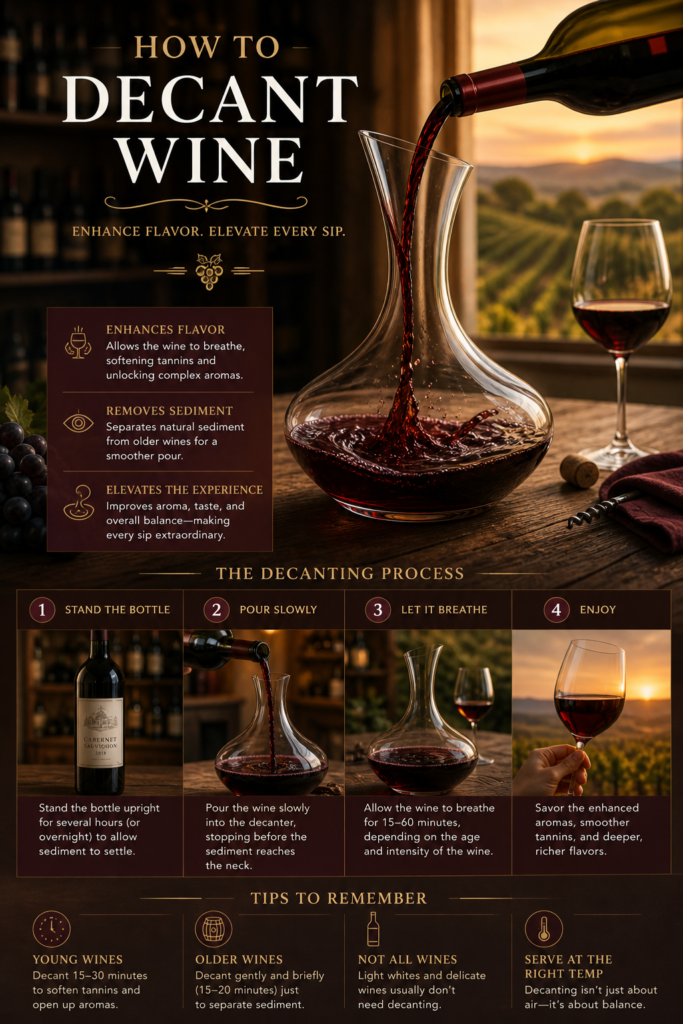
You do not need an expensive decanter to do this properly. Any clean glass pitcher works. Here is the process:
Step 1 — Stand the bottle upright first. If the wine has sediment, stand the bottle upright for an hour before decanting. This lets the sediment settle to the bottom rather than dispersed throughout the wine.
Step 2 — Open the bottle carefully. Remove the cork slowly. Avoid shaking the bottle.
Step 3 — Pour slowly and steadily. Hold the bottle near the neck and pour the wine gently into the decanter in a single, slow, continuous stream. Pouring against the inside wall of the decanter rather than straight down reduces splashing and incorporates air more gently.
Step 4 — Watch the shoulder of the bottle. If the wine has sediment, hold a light or candle under the neck of the bottle as you pour. When you see sediment moving toward the neck, stop pouring. Leave a small amount of wine in the bottle — that is the sediment you do not want in the decanter.
Step 5 — Let it rest. For a young tannic red, let it sit in the decanter for 30 minutes to two hours depending on how tight the wine feels. For older wines, 20 to 30 minutes is usually enough.
How Long to Decant Different Wines
Young, bold reds like Cabernet Sauvignon: 1 to 2 hours Medium-bodied reds like Merlot and Zinfandel: 30 to 60 minutes Light reds like Pinot Noir: 20 to 30 minutes Full-bodied whites like Chardonnay: 15 to 20 minutes Older wines with sediment: 20 to 30 minutes maximum
Do You Need a Real Decanter?
No. Any clean glass vessel works. A glass pitcher, a carafe, or even a large glass bowl does the job. The shape of the decanter does matter slightly — wider bases expose more wine to air — but for everyday decanting, any clear glass container is fine.
If you plan to decant regularly, a simple glass decanter is a worthwhile investment. They are not expensive and they make the whole experience feel a bit more intentional.
Understanding how to decant wine is one of those practical wine basics that immediately improves what you get from every bottle. Pair it with serving at the right temperature and the right glass, and even an affordable bottle will show you its best.
Frequently Asked Questions
How do I know if a wine needs decanting?
Check the label for the vintage year. Young wines — anything under five years old — from full-bodied red grape varieties almost always benefit from decanting. If in doubt, taste a small amount from the bottle and then decant. Compare the two after 30 minutes.
Can I decant wine too long?
Yes. Very old wines can fade quickly once exposed to oxygen. Even young wines that are decanted for several hours can start to lose freshness. When in doubt, taste the wine every 30 minutes to track how it is developing.
What if I do not have a decanter?
Pour the wine into any clean glass container. Even pouring and then pouring back into the bottle a few times works as a quick alternative.
Does decanting work for cheap wine?
Sometimes. Young, tannic inexpensive reds often improve noticeably with air. More delicate or lighter everyday wines show less change.
Can I decant wine overnight?
For most wines, no. More than a few hours of air exposure starts to degrade the wine. Drink decanted wine the same evening. Explore our full range of wine types to understand which styles benefit most from decanting.