Walk into any kitchen store and you will find dozens of wine glasses in different shapes and sizes. It can feel overwhelming. But here is the thing — the shape of your glass actually affects how wine tastes and smells. This wine glass guide breaks down exactly which glass works best for each type of wine and why it matters.
You do not need a different glass for every single grape variety. A few well-chosen shapes will cover everything you drink.
Why Glass Shape Matters
The shape of a wine glass controls where the wine hits your tongue first and how much aroma reaches your nose. A wider bowl allows more oxygen to interact with the wine, releasing more complex aromas. A narrower rim concentrates those aromas and directs them toward your nose as you drink. A taller, narrower glass keeps bubbles alive longer.
These are not marketing claims. The physics of glass design genuinely changes how you experience a wine. Once you taste the same wine from two different glass shapes, the difference is obvious.
Glasses for Red Wine
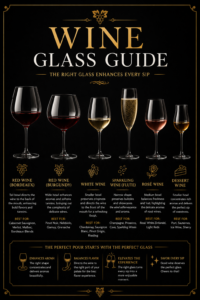
Red wine benefits from larger, wider bowls. The extra surface area allows oxygen to soften tannins and open up aromas. There are two main shapes worth knowing.
Bordeaux Glass This is the standard large red wine glass. It has a tall, wide bowl that tapers toward the rim. It works well for full-bodied, tannic reds like Cabernet Sauvignon, Merlot, and Bordeaux blends. The tall bowl allows the wine to breathe while directing it to the back of your palate, which balances the tannins.
Burgundy Glass This glass has a wider, rounder bowl than a Bordeaux glass, but a shorter overall height. It is designed for more delicate, aromatic reds like Pinot Noir and Chianti. The wide bowl concentrates the subtle aromas that make these wines so expressive, and the shape directs the wine to the tip of your tongue where you taste fruit first.
If you only want one red wine glass, go with a large Burgundy-style bowl. It works well across most red wine styles.
Glasses for White Wine
White wine glasses are smaller and narrower than red wine glasses. This keeps the wine cooler longer and focuses the lighter, more delicate aromas.
Standard White Wine Glass A medium-sized bowl with a slight taper works for most white wines including Pinot Grigio, Sauvignon Blanc, and Riesling. The narrower bowl preserves acidity and freshness.
Chardonnay Glass Fuller-bodied whites like Chardonnay benefit from a slightly larger bowl — closer to a small red wine glass. The extra width allows the richer aromas of butter, vanilla, and oak to open up properly.
Aromatic White Glass Some producers make tall, narrow glasses specifically for aromatic whites like Moscato and Gewürztraminer. The narrow opening concentrates floral aromas at the rim. This is not an essential purchase, but it is a noticeable upgrade if you drink a lot of these styles.
Glasses for Sparkling Wine
Sparkling wine is most commonly served in a flute. The tall, narrow shape preserves bubbles longer and creates a visual effect as the carbonation rises in a continuous stream. Flutes also concentrate the fresh, yeasty aromas that define good Champagne, Prosecco, and Cava.
There is a growing trend toward using white wine glasses or even Burgundy bowls for high-quality Champagne. The argument is that a wider bowl allows the wine’s complexity to open up more fully. This works well for aged or vintage Champagnes but is less ideal for young, fruit-forward sparkling wines.
Avoid coupe glasses for sparkling wine. They look beautiful but the wide, shallow bowl means bubbles dissipate quickly and aromas escape before you can enjoy them.
Glasses for Rosé Wine
Rosé does not require a dedicated glass. A standard white wine glass works well for lighter rosés. For fuller, more complex rosé styles, a slightly larger bowl — similar to a Burgundy glass — allows the wine to breathe and show more character.
Glasses for Dessert Wine
Dessert wine is served in smaller portions because of its intensity and sweetness. Small dessert wine glasses or port glasses — which are essentially a miniature version of a red wine glass — concentrate the rich aromas while keeping pour sizes appropriate.
Sweet wines like Moscato can be served in a standard white wine glass. Rich, fortified wines like Port are better in a smaller, more concentrated glass.
What About Stemless Glasses?
Stemless wine glasses are popular and practical. They are less fragile, easier to store, and work fine for casual drinking. The main drawback is that holding the bowl warms the wine more quickly, which matters most for whites and sparkling wines. For reds served at the right temperature, stemless glasses are perfectly acceptable.
Do You Need Expensive Glasses?
You do not need to spend a lot of money on wine glasses. The shape matters far more than the brand or price. A simple, clear glass with a relatively large bowl and a thin rim is all you need. Thin rims are important — they let the wine flow cleanly onto your palate without interference.
If you want to start with one set of glasses that covers everything, buy a set of large, clear all-purpose wine glasses with a medium-width bowl. They will handle red, white, and rosé reasonably well. Then add a set of flutes if you drink sparkling wine regularly.
Understanding which glass works for which wine is part of developing your overall knowledge of wine basics. It is one of those small details that adds up to a meaningfully better experience over time.
Frequently Asked Questions
Can I use the same glass for red and white wine?
Yes. An all-purpose medium bowl glass works for both. Dedicated glasses improve the experience but are not required.
Should wine glasses be completely clear?
Yes. Clear glass lets you see the color and clarity of the wine, which is part of the tasting process. Colored or frosted glass obscures that information.
How full should I fill a wine glass?
Fill red wine glasses about one third full. White wine glasses about half full. Sparkling wine flutes about two thirds full. Leaving space allows aromas to collect in the bowl above the wine.
Does glass thickness matter?
Yes. Thinner rims deliver wine more cleanly to your palate and feel more elegant. Very thick rims can interfere slightly with how the wine hits your tongue.
How do I clean wine glasses properly?
Rinse immediately after use. Wash with warm water and minimal soap, then rinse thoroughly. Soap residue affects aroma and flavor. Let glasses air dry upright rather than storing them rim-down, which can trap odors.