Tempranillo: Spain’s Bold & Earthy Noble Grape
The World of Tempranillo
While Pinot Noir is delicate and Malbec is plush, Tempranillo is the savory, structural backbone of Spain’s greatest red wines. Known for its thick skins and “early” ripening—from which it takes its name (temprano meaning “early” in Spanish)—this grape produces wines with impressive longevity. It offers a sophisticated balance of red fruit flavors, like dried cherry and leather, underpinned by firm tannins. Whether it’s the centerpiece of a rugged Rioja or a powerful Ribera del Duero, Tempranillo is the ultimate choice for those who appreciate a wine with a sense of place and time.
The Flavor Profile of Tempranillo
From Cherry to Leather
Tempranillo is famous for its transformation during the aging process. While young versions are vibrant and fruity, aged versions develop complex, savory notes:
- Primary Fruits: Fresh cherry, dried fig, and baked plum.
- Secondary Notes: Leather, tobacco leaf, clove, and vanilla.
- Finish: A long, textured finish with earthy minerals and smooth tannins from extensive oak aging.
Two Worlds
Rioja vs. Ribera del Duero
Spain offers two distinct expressions of this noble grape, largely dictated by climate and altitude.
Rioja (The Classic): These wines are often blended with a bit of Garnacha. They tend to be more elegant and acidic, with a heavy emphasis on traditional oak aging (American oak) that imparts notes of coconut and dill.
Ribera del Duero (The Powerhouse): Grown in a harsher, higher-altitude climate, these 100% Tempranillo wines are darker, more concentrated, and more tannic, often using French oak for a modern, “polished” fruit profile.
Food Pairing
The Savory Partner
Tempranillo’s high tannin and savory character make it one of the best companions for grilled and cured foods.
The Perfect Match: Grilled lamb chops with rosemary, wood-fired pizza, and traditional Spanish Tapas like Jamón Ibérico.
Unexpected Pairings: Mexican cuisine (it handles smoky chilies beautifully), roasted root vegetables, and aged Manchego cheese.
Serving Tip: Serve at 60–65°F (15–18°C). Decant older “Reserva” or “Gran Reserva” bottles for 30 minutes to let the earthy aromas breathe.
Fun Facts About Tempranillo
- The “Early” One: It is the first red grape to ripen in Spain, allowing it to avoid the autumn frosts in cooler regions.
- A Grape of Many Names: In Portugal, it is known as Tinta Roriz and is a key component in the production of Port wine.
- The Aging Law: Spain has strict laws for Tempranillo; a “Gran Reserva” must be aged for a minimum of five years before it can even be sold.
- Ancient Origins: It is believed that Tempranillo has been grown on the Iberian Peninsula since the time of Phoenician settlements over 3,000 years ago.
Tempranillo Characteristics
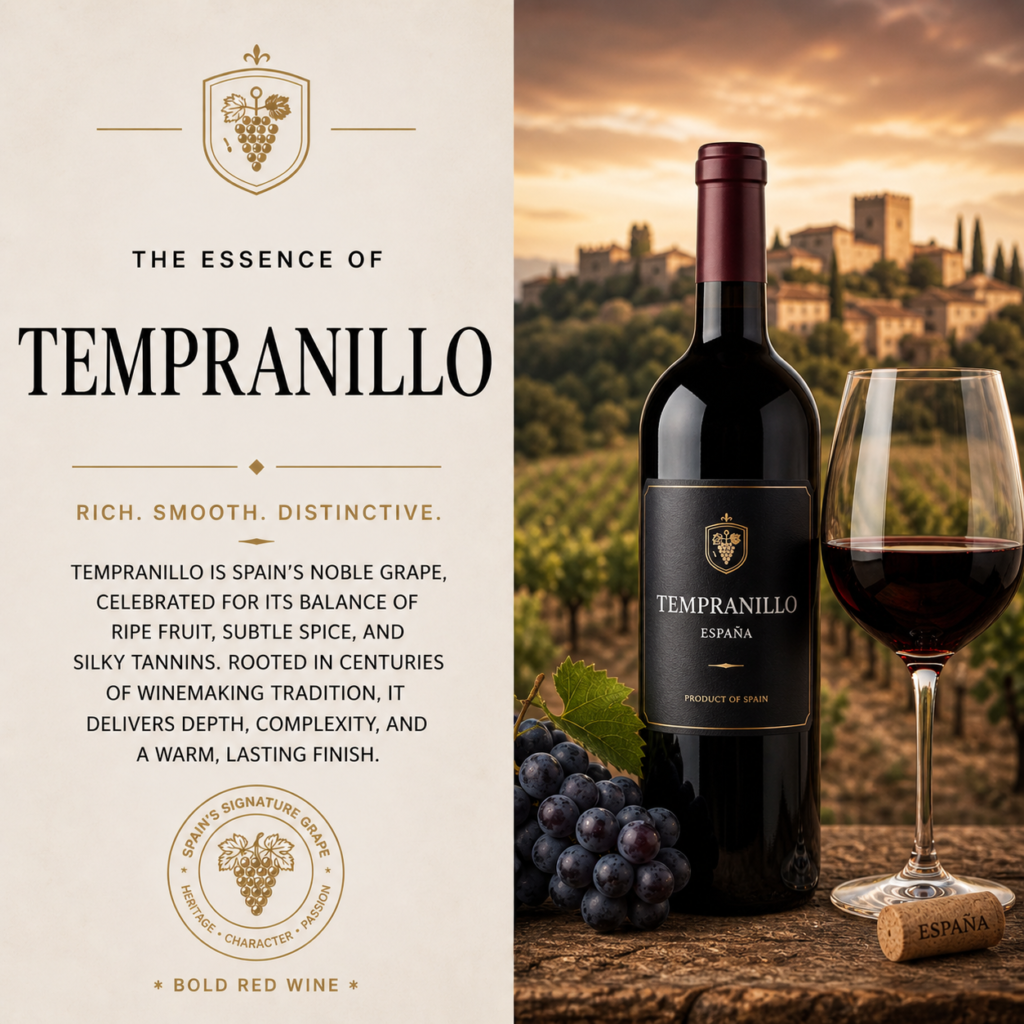
Tempranillo is a distinguished medium-to-full-bodied red wine, prized for its deep ruby color and its unique ability to balance fruit with savory, earthy complexity. It offers a structured and sophisticated profile that has made it the undisputed king of Spanish viticulture.
- Medium-Full Body: Substantial and structured with a firm, drying presence.
- Balanced Acidity: Enough brightness to cut through rich fats and oils.
- Red Fruit Profile: Characteristic flavors of cherry, plum, and dried fig.
- Earthy undertones: Noted for complex hints of leather, tobacco, and cedar.
- Oak-Driven Complexity: Traditionally aged in oak to develop vanilla and spice.
Tempranillo is a chameleon of the cellar, evolving from a juicy, fruit-forward wine in its youth (Joven) to a complex, leathery masterpiece after years in the bottle (Gran Reserva). This evolution makes Tempranillo a favorite for collectors and the ideal choice for those seeking a wine that tells a story of tradition, craftsmanship, and the sun-drenched soils of the Spanish landscape.
- Structural & Savory Style
- Dried Red Fruit Profile
- Long, Earthy Finish
- Exceptional Aging Potential
- Firm Tannic Backbone
- Translucent Ruby Color
- Perfect for Grilled Meats
US Top Tempranillo Wines | Who Are They?
Texas (The High Plains & Hill Country)
Texas is arguably the “New World” home for Tempranillo, with the grape being the state’s flagship red variety.
Pedernales Cellars – Tempranillo Reserve
Spicewood Vineyards – Estate Tempranillo
Bending Branch Winery – Newsom Vineyards Tempranillo
Lewis Wines – Klein Tempranillo
McPherson Cellars – La Herencia
FireSky Wine – Estate Tempranillo
Messina Hof Winery – Private Reserve Tempranillo
Ron Yates Wines – Friesen Vineyard Tempranillo
Lost Draw Wines – High Plains Tempranillo
Fall Creek Vineyards – Salt Lick Vineyards Tempranillo
Duchman Family Winery – Bingham Family Vineyards
William Chris Vineyards – Tempranillo Blends
Becker Vineyards – Reserve Tempranillo
Southold Farm + Cellar – The Last Waltz
Ab Astris Winery – Texas Tempranillo
4R Ranch Vineyards – Gaston Reserve
Perissos Vineyard – Doro Tempranillo
Signor Vineyards – Estate Grown
Texas Heritage Vineyard – Wildseed Farms
Torr Na Lochs – Estate Tempranillo
Oregon (Rogue & Umpqua Valleys)
Southern Oregon’s hot, dry days and cool nights create a Tempranillo profile very similar to the Ribera del Duero.
Abacela – Paramour (The American pioneer of Tempranillo)
Reustle Prayer Rock Vineyards – Estate Selection
Cliff Creek Cellars – Rogue Valley Tempranillo
Schmidt Family Vineyards – Applegate Valley Tempranillo
Belle Fiore Winery – Terroir Series
Kriselle Cellars – Rogue Valley
Upper Five Vineyard – Organic Tempranillo
Girardet Vineyards – Umpqua Valley
DANCIN Vineyards – Adagio
Quady North – Steelhead Run Vineyard
California (Lodi, Sierra Foothills & Central Coast)
California’s Tempranillo often takes a riper, more fruit-forward approach, particularly in Lodi and the volcanic soils of the Sierra Foothills.
Bokisch Vineyards – Las Cerezas Vineyard (Lodi)
Naggiar Vineyards – Sierra Foothills
Matchbook Wine Co. – Dunnigan Hills Tempranillo
Yorba Wines – Shake Ridge Vineyard
Bodegas Paso Robles – Spanish Varietals
LXV Wine – Paso Robles
Twisted Rivers – Lodi
Fields Family Wines – Estate Tempranillo
Niner Wine Estates – Edna Valley
Verdad Wines – Sawyer Lindquist Vineyard
Washington & Idaho (Columbia Valley & Snake River)
The Pacific Northwest’s colder winters and high-elevation sunlight produce structural, earthy Tempranillos.
Gramercy Cellars – Inigo Montoya
Cayuse Vineyards – Impulsivo (Highly exclusive)
Hat Ranch Winery – Snake River Valley
Bitner Vineyards – Reserve Tempranillo
Fujishin Estate Winery – Snake River Valley
Martin-Scott Winery – Columbia Valley
Cave B Estate Winery – Ancient Lakes
Vizcaya Winery – Idaho Gold Medalist
Snake River Winery – Arena Valley
Sawtooth Winery – Skyline Vineyard