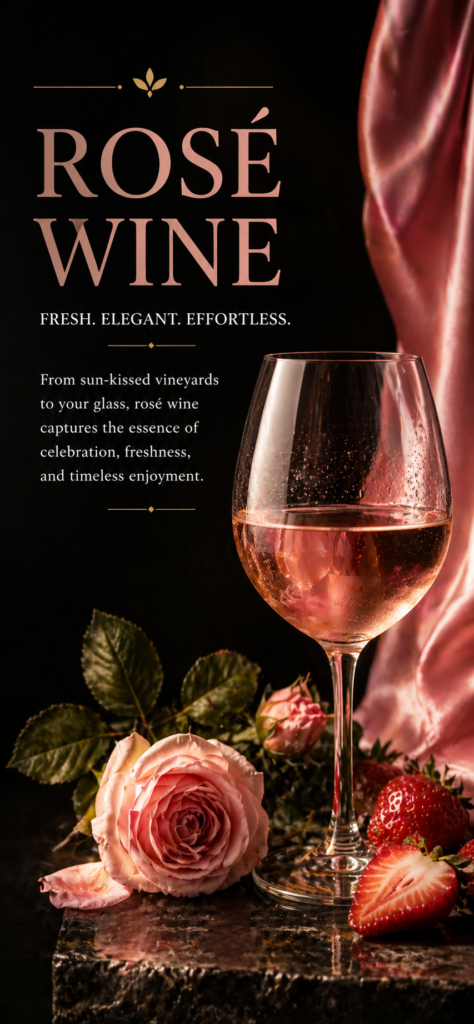
Rosé wine sits perfectly between red and white, offering the best of both worlds. It delivers fresh fruit flavors, light structure, and a crisp finish that makes it one of the most versatile wines available. From pale and dry to slightly sweet and vibrant, rosé is designed to be refreshing and easy to enjoy.
Whether you are new to wine or looking for something lighter, rosé provides an approachable entry point without sacrificing complexity. It is bright, expressive, and built for everyday drinking across seasons.
Rosé wines are known for their crisp, clean finish. They are typically lighter in body than red wines, making them ideal for warm weather and casual occasions.
Expect notes of strawberry, watermelon, citrus, and soft floral tones. Rosé wines highlight fresh fruit without the heaviness often found in red wines.
Rosé wine is made from red grapes, but unlike red wine, the grape skins are only in contact with the juice for a short period. This limited contact gives rosé its signature pink color while keeping the flavor profile lighter and more refreshing.
The color of rosé can range from pale blush to deep pink, depending on how long the skins remain in contact during production. This process allows winemakers to control both the intensity of color and flavor.
Rosé is not simply a blend of red and white wine. It is a carefully crafted style with its own production methods, including direct press and saignée. Each method influences the body, color, and overall taste.
The best rosé wines focus on balance. Acidity, fruit, and structure work together to create a wine that is crisp, smooth, and easy to drink without feeling overly simple.
Direct press rosé is made by gently pressing red grapes and quickly separating the juice from the skins. This creates a pale color and a light, crisp style that is clean and refreshing.
Examples: Provence Rosé, Pinot Noir Rosé
SAIGNÉE ROSÉ
Saignée rosé is produced by removing juice early during red wine fermentation. This results in a darker rosé with more body and deeper fruit flavors.
Examples: Cabernet Sauvignon Rosé, Syrah Rosé
SPARKLING ROSÉ
Sparkling rosé adds bubbles to the bright, fruit-forward profile of rosé wine. These wines are lively, refreshing, and ideal for celebrations or casual enjoyment.
Examples: Rosé Champagne, Sparkling Rosé Prosecco
SWEET ROSÉ
Sweet rosé wines are softer and fruitier, often with a touch of residual sugar. They are smooth, approachable, and popular with newer wine drinkers.