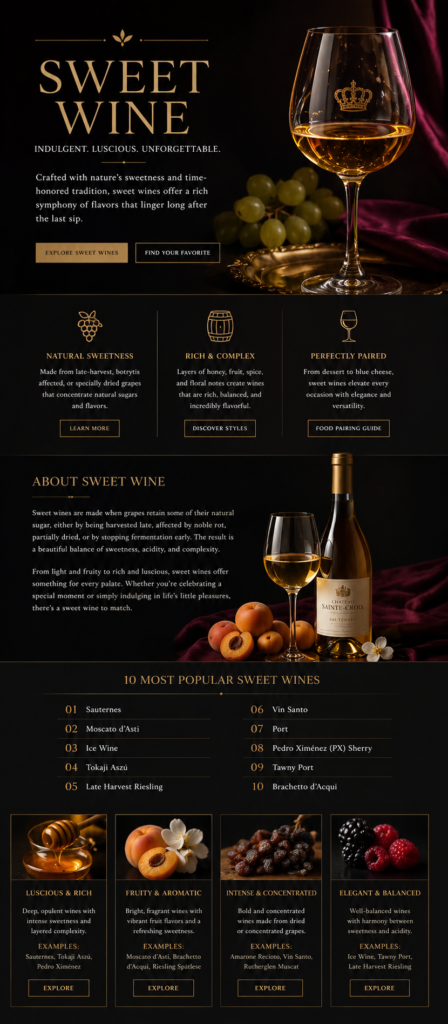
Sweet wine is all about richness, flavor, and balance. While often misunderstood as overly sugary, true sweet wines are crafted with precision to highlight natural fruit, acidity, and texture. From light and refreshing to deep and decadent, sweet wines offer one of the most approachable entry points into the world of wine.
Whether you’re new to wine or looking to explore something more indulgent, sweet wines deliver bold flavor without complexity overload. They are smooth, expressive, and easy to enjoy across a wide range of occasions.
Sweet wines are made by preserving natural grape sugars. This can happen through late harvesting, drying grapes, or halting fermentation early. The result is a wine that tastes rich without feeling artificial.
Expect flavors like peach, honey, apricot, berries, and tropical fruit. Sweet wines are often smoother and easier to drink, making them ideal for beginners or casual wine drinkers.
Sweet wines pair beyond dessert. They complement spicy foods, salty cheeses, and rich dishes by balancing flavor intensity and enhancing the overall experience.
Sweet wine is defined by the presence of residual sugar that remains after fermentation. During the winemaking process, yeast converts grape sugar into alcohol. In sweet wines, that process is stopped early or managed differently, allowing some of the natural sugar to stay in the wine.
Unlike dry wines, where nearly all sugar is fermented out, sweet wines retain this natural sweetness. This gives them a softer, rounder mouthfeel and a more approachable flavor profile. The result is a wine that feels smooth, expressive, and easy to enjoy from the first sip.
Sweetness in wine does not come from added sugar. It is a natural outcome of how and when grapes are harvested and how fermentation is controlled. Techniques such as late harvest, drying grapes, or using noble rot help concentrate sugars and enhance flavor intensity.
The best sweet wines are not just sugary. They are built on balance. Acidity, structure, and flavor depth work alongside sweetness to keep the wine from feeling heavy. This balance allows each sip to stay fresh, layered, and enjoyable rather than overwhelming.
Moscato d’Asti Sauternes Ice Wine Tokaji Aszú Late Harvest Riesling Port Tawny Port Pedro Ximénez (PX Sherry) Vin Santo Brachetto d’Acqui
The Four Types of Sweet Wine
Late Harvest Wines
Late harvest wines are made from grapes left on the vine longer than usual. As they ripen, the sugars concentrate, creating a naturally sweeter and more flavorful wine without losing balance.
Examples: Late Harvest Riesling, Late Harvest Chenin Blanc
Noble Rot Wines
These wines are produced using grapes affected by Botrytis cinerea, also known as noble rot. This process reduces water content and intensifies sugar and flavor, resulting in rich, complex wines with notes of honey and dried fruit.
Examples: Sauternes, Tokaji Aszú
Fortified Sweet Wines
Fortified wines have additional alcohol added during fermentation, which stops the process early and preserves natural sugar. This creates bold, sweet wines with higher alcohol and deeper richness.
Examples: Port, Tawny Port, Pedro Ximénez (PX Sherry)
Dried Grape Wines
These wines are made from grapes that are dried either on the vine or after harvest. Removing water concentrates the sugars and flavors, producing intense and often luxurious sweet wines.